public health

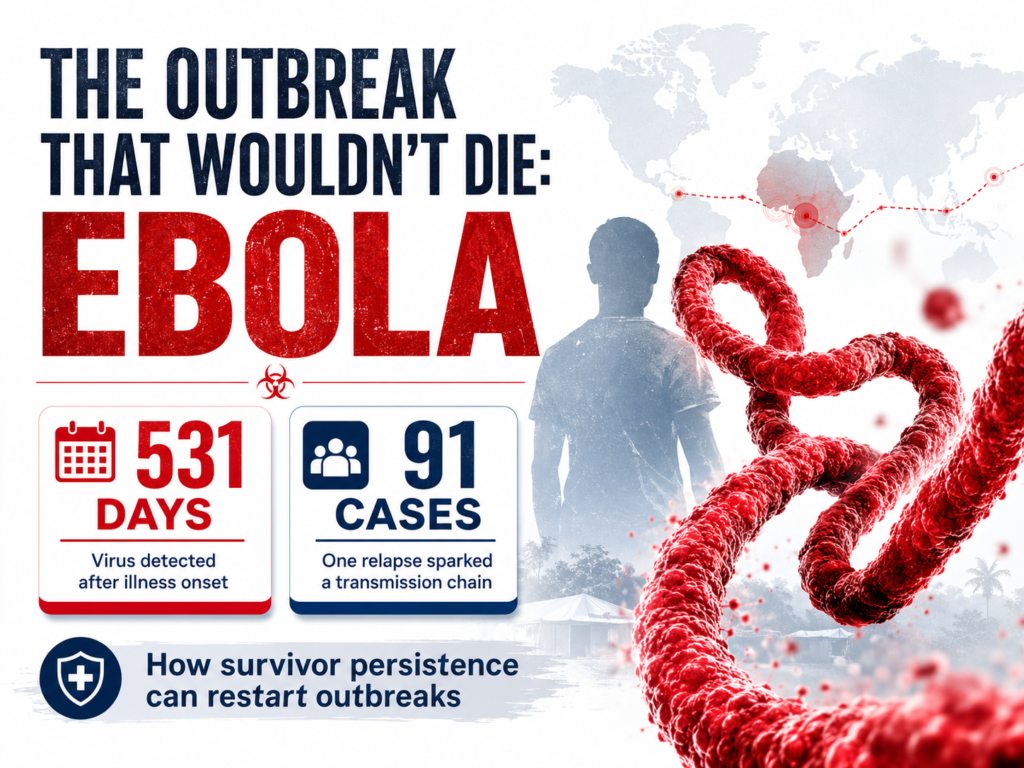
Featured image titled The Outbreak That Wouldn’t Die: Ebola, showing an Ebola virus graphic, survivor silhouette, world map, and statistics on 531 days of virus detection and 91 relapse-linked cases.
Uncategorized

The Outbreak That Wouldn’t Die: Ebola

Epidemiologists have found that recent Ebola outbreaks may be linked to the virus re-emerging from human survivors rather than from wildlife. The virus can persist in immune-protected sites, notably semen, for months. A significant percentage of survivors experience long-term health effects, necessitating continued surveillance and testing for ongoing transmission risks.

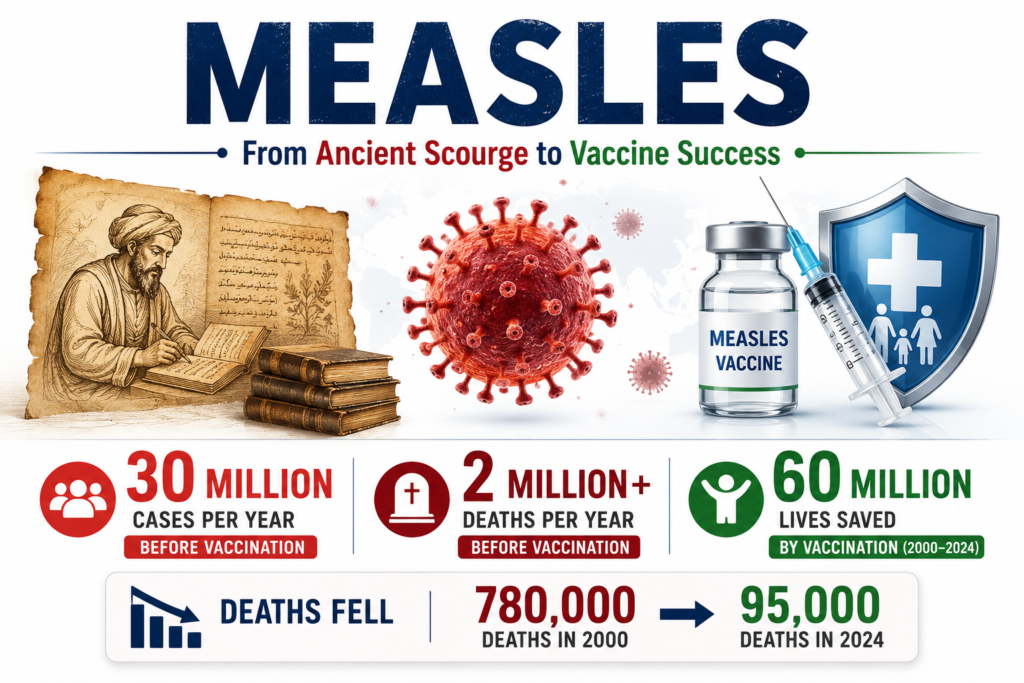
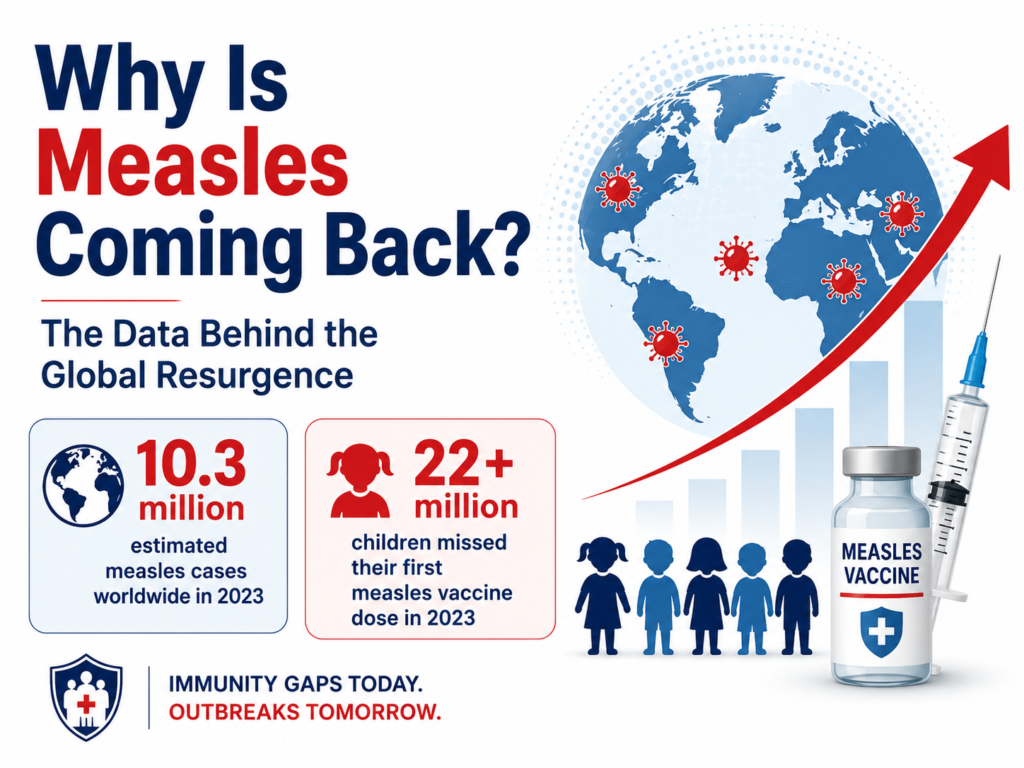
Featured image showing the history of measles from ancient times to vaccine development, including a measles virus illustration, vaccine vial and syringe, and key statistics: 30 million annual cases and 2 million deaths before vaccination, 60 million lives saved through vaccination, and a decline in deaths from 780,000 in 2000 to 95,000 in 2024.
Uncategorized

History of Measles: Major Outbreaks, Vaccine Development, and Global Impact

The measles virus, believed to have evolved from rinderpest, has a rich historical context with significant developments in understanding and vaccination. Despite vaccination efforts dramatically reducing mortality, recent outbreaks in regions like Bangladesh illustrate the importance of maintaining high vaccination coverage. Measles remains a serious threat, highlighting past lessons and current challenges.

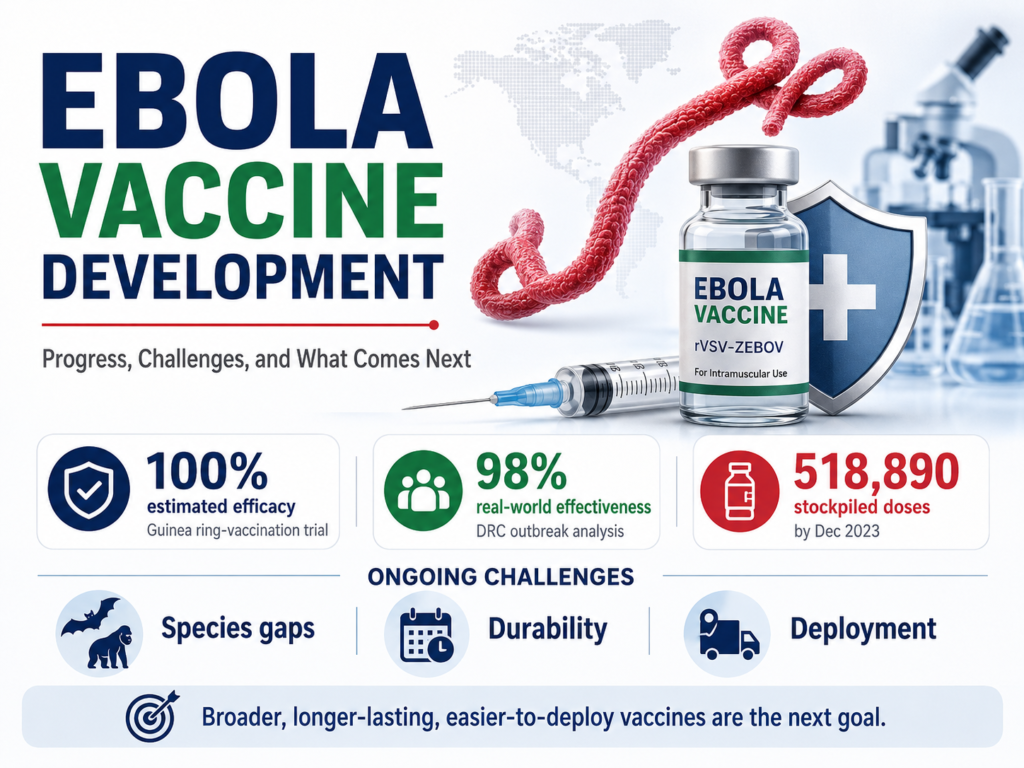
Featured image about Ebola vaccine development showing an Ebola vaccine vial, virus illustration, syringe, laboratory setting, and key data including 100% estimated efficacy in the Guinea ring-vaccination trial, 98% real-world effectiveness in DRC outbreak analysis, 518,890 stockpiled doses, and ongoing challenges such as species gaps, durability, and vaccine deployment.
Uncategorized

Why there is still no Universal Ebola Vaccine

Ebola vaccine development has made major progress, moving from experimental research to licensed vaccines and real-world outbreak control. Yet important challenges remain, including limited protection across all Ebola species, uncertain durability of immunity, and the difficulty of testing vaccines during unpredictable outbreaks.

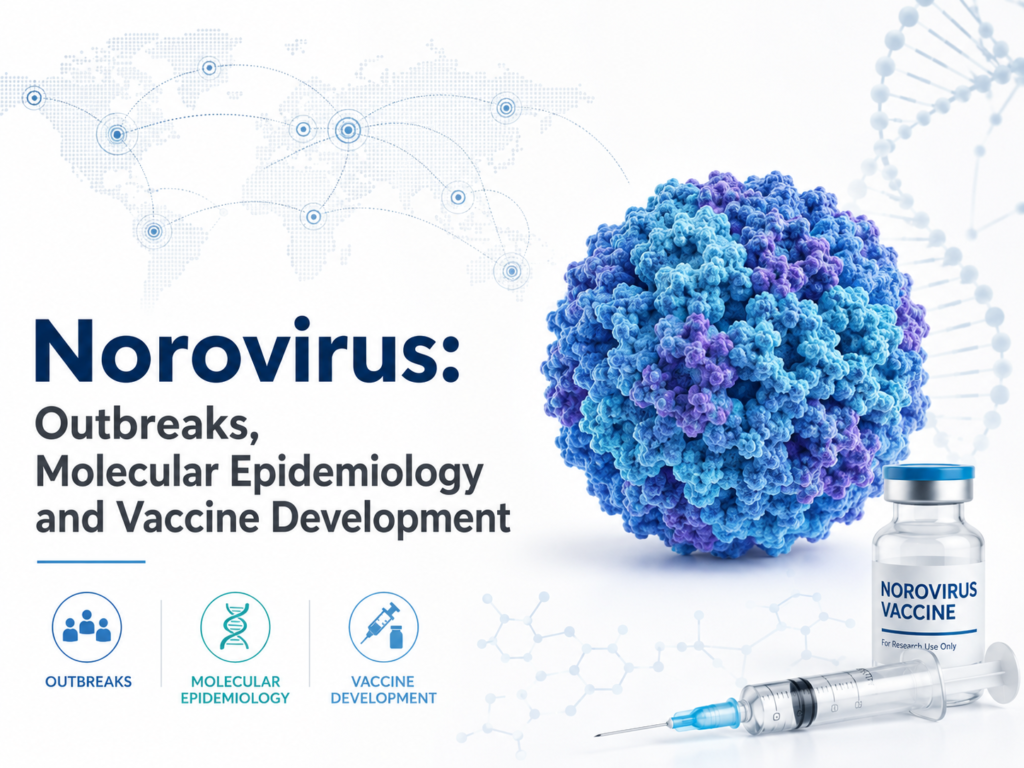
Featured image showing a 3D norovirus particle with global outbreak network graphics, DNA structures, and a vaccine vial and syringe on a white scientific background.
Uncategorized

Norovirus: Outbreaks, Molecular Epidemiology and Vaccine Development

Norovirus was first identified in 1968 during an AGE outbreak in Ohio, later characterized and sequenced in the early 1990s. It causes significant illness globally, particularly in developing regions. Challenges for vaccine development include the virus’s genetic diversity and lack of reliable culture systems. Current research focuses on candidate vaccines targeting multiple genotypes.

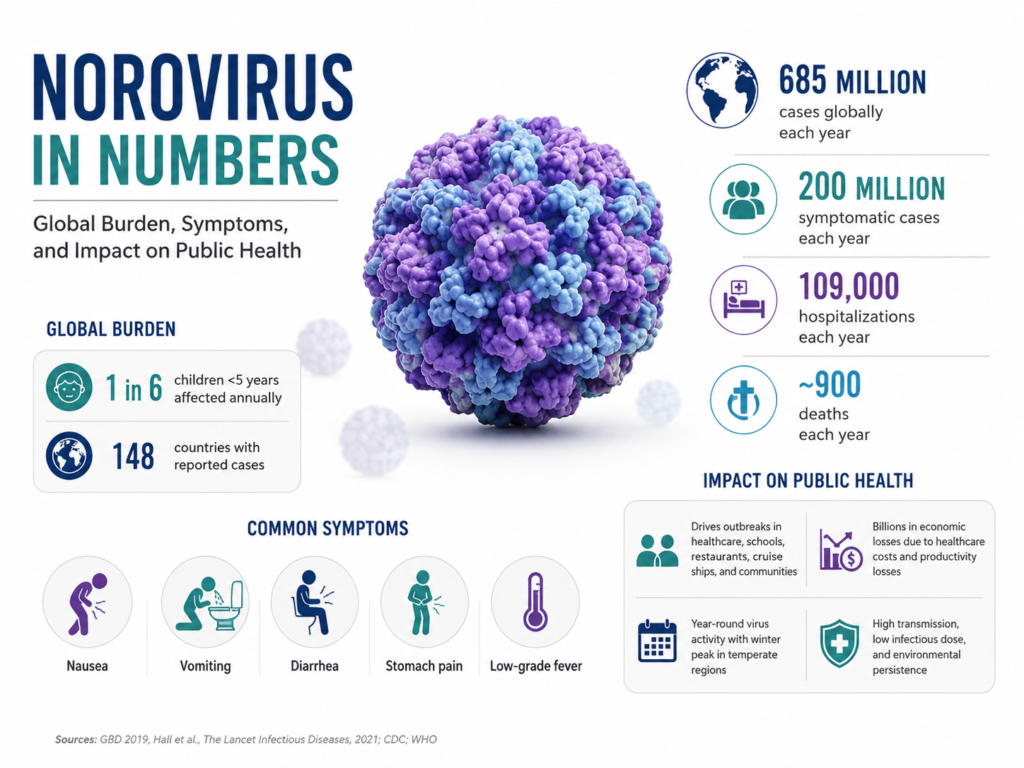
Medical infographic about norovirus showing global burden statistics, symptoms, hospitalizations, deaths, and public health impact with a 3D norovirus particle on a clean white background.
Uncategorized

Norovirus In Numbers : Global Burden, Symptoms, and Impact on Public Health

Norovirus is the leading cause of acute gastroenteritis worldwide, causing an estimated 685 million infections and 210,000 deaths annually. It significantly affects young children and developing countries. The economic impact is substantial, costing the U.S. about $2 billion yearly. Effective prevention measures are crucial to combat its high transmission rates and health burden.

Scroll to Top