
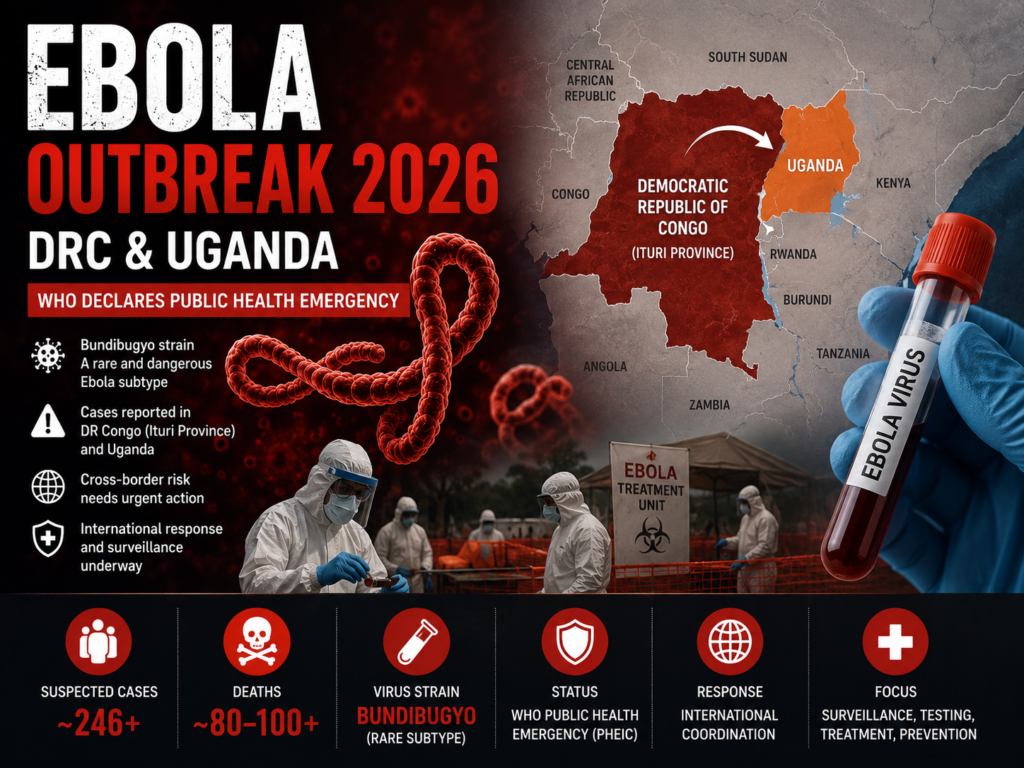
Epidemiologists were terrifyingly baffled with the current scenario of Ebola outbreak when they discovered that the virus didn’t come from animals. Rather, it might had ‘awoken’ from a human survivor. The Guinea outbreak in 2021 suggested that the outbreak was not caused by a fresh jump from wildlife. Instead, it was most consistent with virus persistence in a human survivor, with reduced replication or latency, followed by re-emergence years later. The same thing happened with the 2026 DRC Ebola outbreak.
Ebola virus transmits from person-to-person through infected bodily fluids, and secretions. The virus usually disappears from blood after recovery. However, study suggests that it can still persist in Immune-Privileged Sites (IPNs), such as testes, eyes, central nervous system, placenta, amniotic fluid, and breast milk.
The Viral Timeline: How long can it Survive?
One of the most frequent sites is semen. A Sierre Leione study suggests that out of 93 male survivors, all 9 men tested within the first 3 months after illness onset had Ebola virus RNA detected in semen. Among men tested 4–6 months after illness onset, 26 of 40, or 65%, were still positive. Among men tested 7–9 months after illness onset, 11 of 43, or 26%, were still positive. One participant remained positive 9.5 months after illness onset. Other studies showed that Ebola outbreaks in Guinea and Liberia were triggered through one survivor who had Ebola virus detected in seminal fluid 531 days after disease onset.
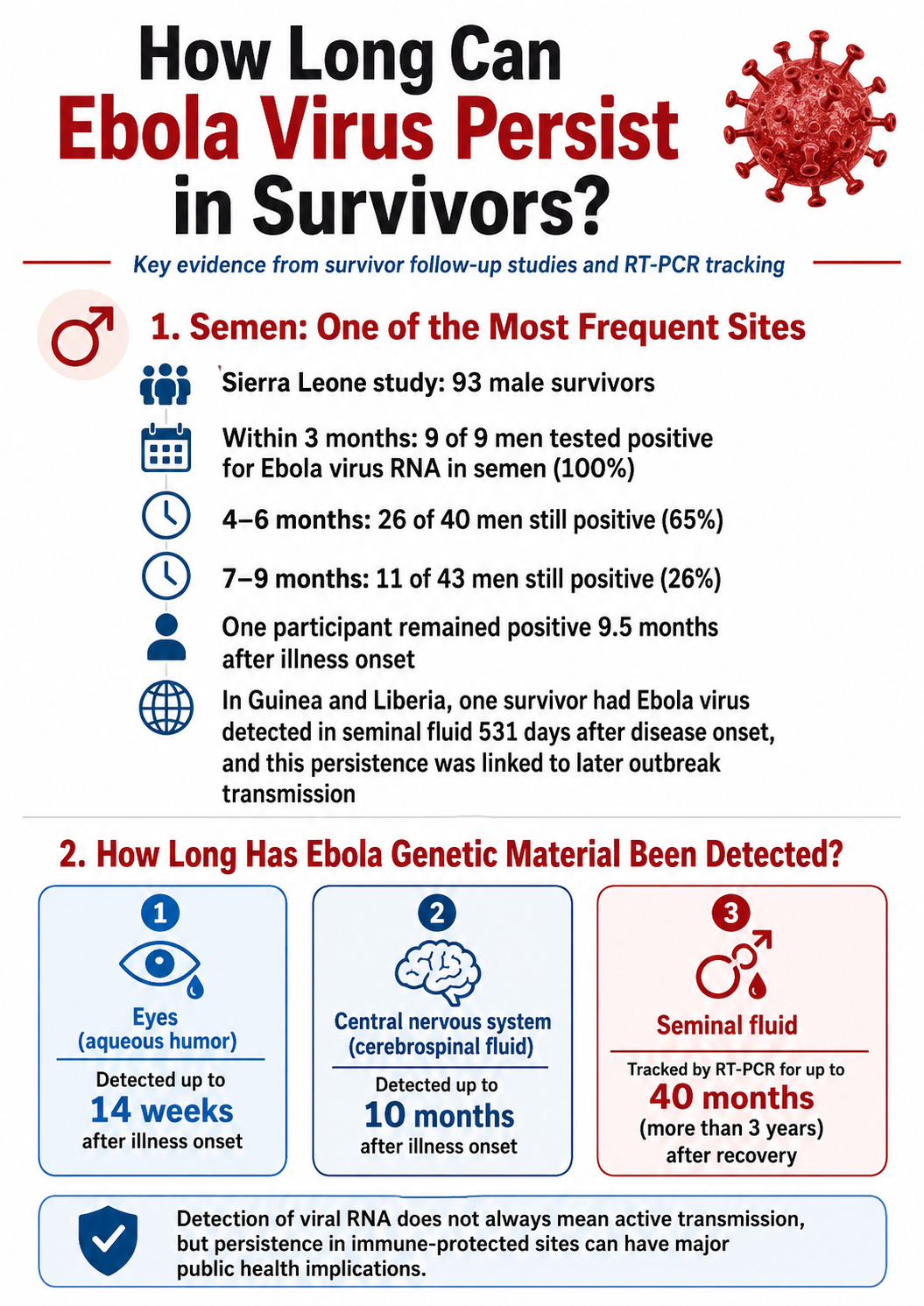
RT-PCR tracking from the WHO and CDC reveals how long Ebola genetic material can persist in secondary fluids:
- Eyes (Aqueous Humor): Detected up to 14 weeks post-onset.
- Central Nervous System (Cerebrospinal Fluid): Detected up to 10 months post-onset.
- Seminal Fluid: Has been tracked via PCR for up to 40 months (over 3 years) after recovery.
Post-Ebola Syndrome
A longitudinal cohort data from DRC outbreak survivors showed that that a shocking 86.7% to 90% of Ebola survivors experience long-term, debilitating health effects for at least 38 months post-release.
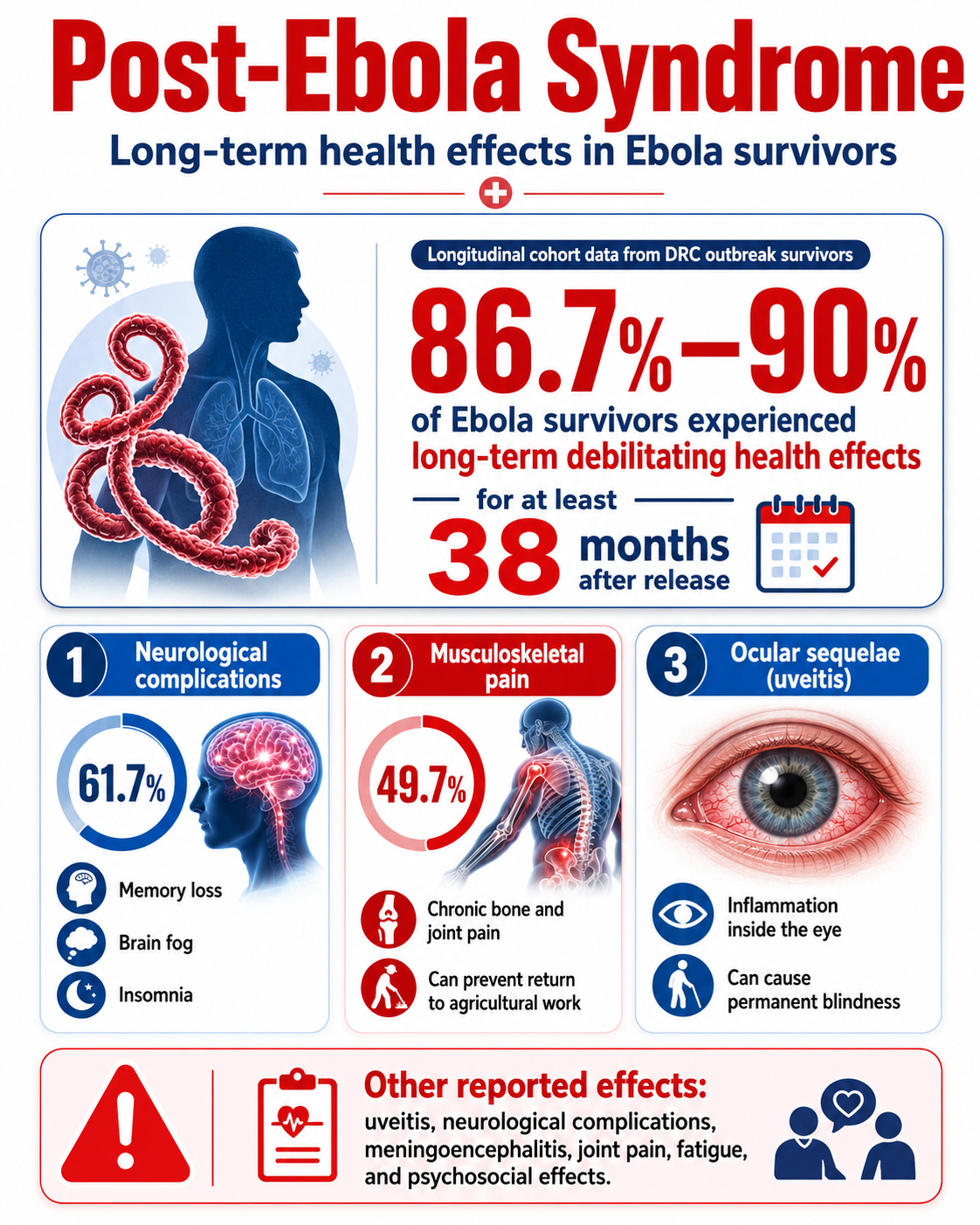
As tracked by clinicians, these included:
- Neurological Complications (61.7%):
- Severe memory loss
- Intense “brain fog”
- Insomnia
- Musculoskeletal Pain (49.7%):
- Severe, chronic bone and joint pain
- Prevents survivors from returning to agricultural work
- Ocular Sequelae (Uveitis):
- Severe inflammation inside the eye
- Can cause permanent blindness
Other studies and case reports have described uveitis, neurological complications, meningoencephalitis, joint pain, fatigue, and psychosocial effects.
Preventing Ghost Outbreaks: How to Challenge this Epidemiological Threat?
1. The 42-day declaration
The 42-day period without new cases is useful for declaring the end of active transmission, but it should not be treated as the end of all Ebola risk. The 2021 Guinea outbreak had 23 cases, including 16 confirmed cases, 7 probable cases, and 12 deaths. Genomic evidence linked the 2021 virus to the earlier 2013–2016 West Africa epidemic, showing that Ebola can reappear years after a previous outbreak.
2. The Transmission Risk
WHO recommends semen testing for male survivors from 3 months after disease onset, with monthly testing for those who remain positive until two negative RT-PCR tests are recorded at least one week apart. Confidential testing, counselling, condom advice, and anti-stigma support should be included with follow-up.
3. Genomic Sequencing and Survivor-Centred Surveillance
A 2023 review identified 35 Ebola disease outbreaks from 1976 to 2022 and found that resurgence of human-to-human transmission may explain roughly one-quarter of Ebola virus outbreaks. Surveillance should support survivors, not punish or blame them.
4. Preparing for Rare but High-Impact Relapse Events
Relapse is uncommon, but one case can restart transmission. In the Democratic Republic of the Congo, one male survivor relapsed 149 days after discharge and triggered a transmission chain of 91 cases across six health zones over four months. This shows the need for rapid diagnosis, contact tracing, isolation capacity, vaccination readiness, and trusted community communication even after an outbreak appears to be over.
References
Judson, S. D., & Munster, V. J. (2023). The multiple origins of Ebola disease outbreaks. The Journal of Infectious Diseases, 228(Supplement_7), S465–S473. https://doi.org/10.1093/infdis/jiad352
Dokubo, E. K., Wendland, A., Mate, S. E., Ladner, J. T., Hamblion, E. L., Raftery, P., et al. (2018). Persistence of Ebola virus after the end of widespread transmission in Liberia: An outbreak report. The Lancet Infectious Diseases, 18(9), 1015–1024. https://doi.org/10.1016/S1473-3099(18)30417-1
Scott, J. T., Sesay, F. R., Massaquoi, T. A., Idriss, B. R., Sahr, F., & Semple, M. G. (2016). Post-Ebola syndrome, Sierra Leone. Emerging Infectious Diseases, 22(4), 641–646. https://doi.org/10.3201/eid2204.151302
Mbala-Kingebeni, P., Pratt, C., Mutafali-Ruffin, M., Pauthner, M. G., Bile, F., Nkuba-Ndaye, A., et al. (2021). Ebola virus transmission initiated by relapse of systemic Ebola virus disease. The New England Journal of Medicine, 384(13), 1240–1247. https://doi.org/10.1056/NEJMoa2024670
Agusto, F. B. (2017). Mathematical model of Ebola transmission dynamics with relapse and reinfection. Mathematical Biosciences, 283, 48–59. https://doi.org/10.1016/j.mbs.2016.11.002
World Health Organization. (2021, June 19). Ebola virus disease – Guinea. https://www.who.int/emergencies/disease-outbreak-news/item/2021-DON328
World Health Organization. (2025, December 1). Ebola virus disease – Democratic Republic of the Congo. https://www.who.int/emergencies/disease-outbreak-news/item/2025-DON589
Centers for Disease Control and Prevention. (2025, March 12). Caring for Ebola disease survivors in the U.S.https://www.cdc.gov/ebola/hcp/clinical-guidance/management-of-survivors.html
Dilu-Keti, A., Tovar-Sanchez, T., Cuer, B., Nkuba-Ndaye, A., Mukadi-Bamuleka, D., Panzi-Kalunda, E., et al. (2025). Long-term sequelae in Ebola virus disease survivors receiving anti-Ebola virus therapies in the Democratic Republic of the Congo: A prospective cohort study. Open Forum Infectious Diseases, 12(8), ofaf436. https://doi.org/10.1093/ofid/ofaf436
CIDRAP. (2025). Almost 90% of treated Ebola survivors have long-term health effects, data show. Center for Infectious Disease Research and Policy, University of Minnesota. https://www.cidrap.umn.edu/ebola/almost-90-treated-ebola-survivors-have-long-term-health-effects-data-show
Pingback: History of Ebola: Discovery, Outbreaks and Timeline – Disease Buddy
Pingback: Why is Measles Coming Back? The Data Behind the Global Resurgence – Disease Buddy
Pingback: Bird Flu (H5N1): Could It Become The Next Pandemic? – Disease Buddy
Pingback: Ebola Outbreak Timeline: History, Major Epidemics and Global Impact (1976–2026) – Disease Buddy