
Introduction: The Mathematical Mystery
Tuberculosis (TB) is considered one of the deadliest infectious diseases in the world. According to a data in 2019, out of 10 million people infected with tuberculosis (WHO), 2.9 million were not diagnosed, notified to National TB programmes (NTPs), or never successfully treated. The COVID-19 pandemic further worsened this global detection gap. This gap between the estimated number of infected TB patients and the number who are actually identified and reported is termed as the “Missing Millions.” The number of “missing millions” increased dramatically from 2.9 million people in 2019 to 4.2 million in 2020, reflecting major disruptions in TB diagnosis, treatment, and healthcare access during the pandemic period.

Nearly 75% of the world’s “missing” tuberculosis (TB) cases are concentrated in 13 countries: Bangladesh, the Democratic Republic of Congo, India, Indonesia, Kenya, Mozambique, Myanmar, Nigeria, Pakistan, the Philippines, South Africa, Tanzania, and Ukraine. In 2015 alone, India accounted for 23% of the global burden of active TB and approximately 27% of the world’s “missing” TB patients. These missing patients include individuals who were either undiagnosed, unreported, or did not receive effective TB care, allowing continued transmission of the disease within communities.
Why Are TB Patients Missing?
- Financial Barriers and Catastrophic Costs: TB patients face hidden costs even though the medicine and treatment are technically free. The social consequences, overcrowded housing, malnutrition, and poverty are some of the strongest factors that elevate the situation.
- Diagnostic Barriers: Many remote clinics and health settings still rely on the sputum smear microscopy method that has been outdated and relatively less sensitive. Even though culture based methods are more sensitive, they require weeks for the result to become available. Furthermore, the infrastructural and financial limitations create a barrier for the modern molecular diagnostics such as GeneXpert.
- The Pediatric Gap: A tragic and surprising stat shows that 43% of children with TB are completely missed by diagnosis and never access treatment.
- Fragmented Health System and Underreporting: Many countries have dominant private healthcare services, due to which the national TB programs get overshadowed. This creates economic burden to the people, who undergo the testing but never return for the result.

The Danger of the Data Blindspot
- Unchecked Transmission: The delay in detection may result in 10 to 15 other infections by a single person over the course of a year just through coughing and sneezing.
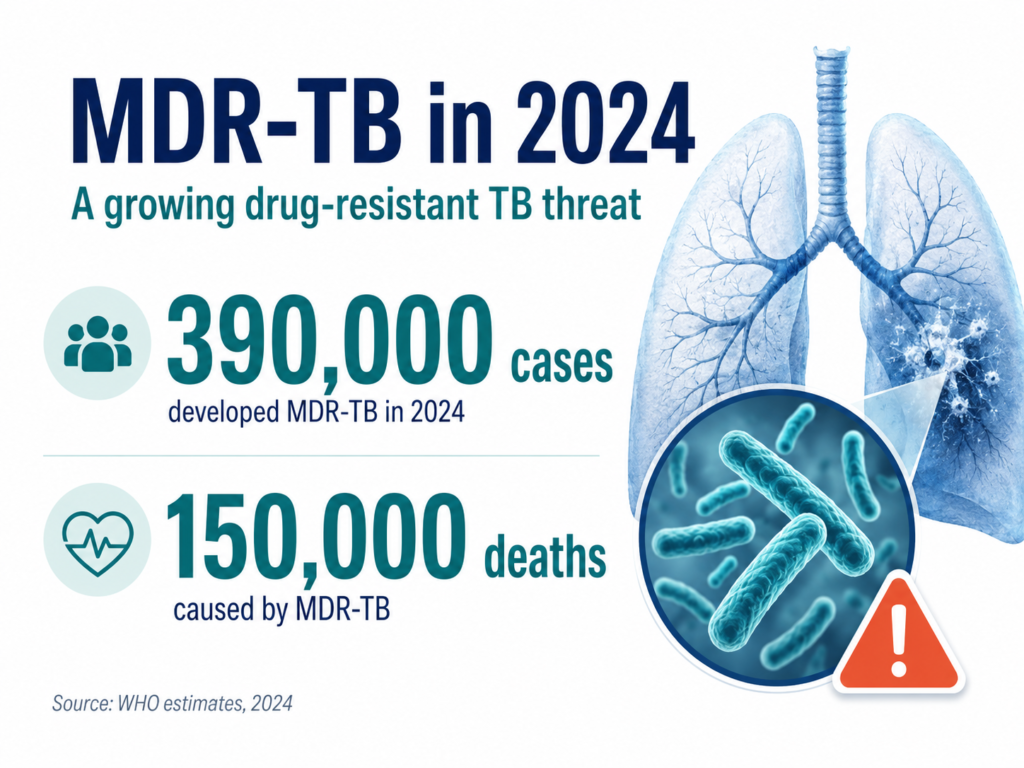
- The Drug-Resistance Threat: Multidrug-Resistant TB (MDR-TB) has already been prevalent due to late diagnosis or dropping out of treatment. It is one of the major problem currently, considering the situation of TB worldwide.
Strategies to Find the Missing Millions
Active community screening, mobile chest X-ray unites, contact tracing, and integration of molecular doagnostics are some of the major components of these strategies to find the missing millions of TB patients. Moreover, AI assisted digital technologies are being considered as promising tools to improve detection in areas with limited resources and surveillance.

One of the most critical challenges is inadequate funding. The WHO has described the global fight against TB as “chronically underfunded.” In 2019, there was an estimated overall funding shortfall of approximately $3.3 billion (£2.6 billion; €3 billion) for TB prevention and care services worldwide. International funding, which is essential for many low- and middle-income countries, reached only $0.9 billion in 2019, with the United States contributing as the largest donor. In addition to gaps in healthcare funding, TB research also remains severely underfunded, with an estimated annual research funding shortfall of $1.2 billion.
Conclusion
The WHO End TB Strategy targets 90% reduction in TB infection and mortality by 2030. However, no significant progress has been seen on the matter. Although advances in diagnostics and treatment have improved outcomes, major challenges remain in ensuring equal detection and accessibility to health services. There is a need for better strategy, if WHO plans to complete it’s goal of reducing TB by 2030, and eliminate TB as a public health threat.
References
Stop TB Partnership. (2015). Mission End TB: Finding the Missing Millions. Geneva, Switzerland: Stop TB Partnership and World Health Organization.The Lancet Respiratory Medicine. (2020). Tuberculosis detection and care gap analysis: Challenges in diagnosis and treatment access. The Lancet Respiratory Medicine, 8(3), 219–221. https://doi.org/10.1016/S2213-2600(20)30045-7
Pai, M., Schito, M., & Tuberculosis Diagnostics Working Group. (2015). Tuberculosis diagnostics in 2015: Landscape, priorities, needs, and prospects. Journal of Infectious Diseases, 211(Suppl 2), S21–S28. https://doi.org/10.1093/infdis/jiu803
The Lancet Global Health. (2021). Post-COVID tuberculosis burden and decline in case notifications. The Lancet Global Health, 9(11), e1518–e1519. https://doi.org/10.1016/S2214-109X(21)00469-6
Subbaraman, R., Nathavitharana, R. R., Mayer, K. H., Satyanarayana, S., Chadha, V. K., Arinaminpathy, N., & Pai, M. (2016). Constructing care cascades for active tuberculosis: A strategy for program monitoring and identifying gaps in quality of care. BMJ Global Health, 1(1), e000004. https://doi.org/10.1136/bmjgh-2015-000004
World Health Organization. (2020). Global tuberculosis report 2020. Geneva, Switzerland: World Health Organization. https://www.who.int/publications/i/item/9789240013131
World Health Organization. (2015). The End TB Strategy. Geneva, Switzerland: World Health Organization. https://www.who.int/teams/global-tuberculosis-programme/the-end-tb-strategy

Pingback: Multidrug-Resistant Tuberculosis (MDR-TB) – One of the World’s Most Deadliest Threats – Disease Buddy
Pingback: Why is Measles Coming Back? The Data Behind the Global Resurgence – Disease Buddy
Pingback: Multidrug-Resistant Tuberculosis (MDR-TB): Symptoms, Causes & Global Threat – Disease Buddy
Pingback: The Illusion of Free Care: How TB Financing Gaps Become Household Financial Crises - Disease Buddy