
A New Dimension to an Old Mystery
Alzheimer’s disease is the most common cause of dementia worldwide. For decades it has been affecting millions of people. Scientists have believed that the disease initiates when a protein called amyloid beta builds up in the brain, forming sticky plaques that damage brain cells. However, there is a new look at that old view. A research made by University of California, Riverside suggests that amyloid plaques may not be the only cause. The disease may involve a complex interaction between several biological factors, and may start much earlier.
A Potential New Trigger Inside Brain Cells
Inside healthy brain cells, there is a protein called tau. It helps stabilize microscopic structures known as microtubules, that allow nutrients and important materials to travel throughout the neuron.
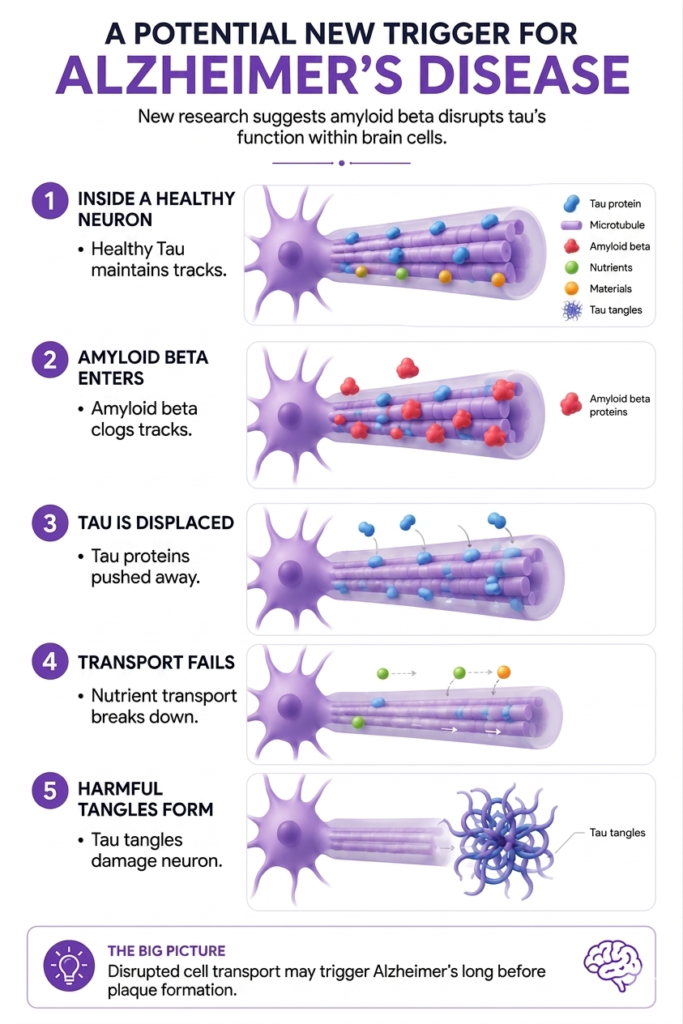
According to the researchers at the University of California, Riverside, amyloid beta may compete with tau for the same binding sites on these microtubules. Too much amyloid beta accumulation inside neurons may push tau out of its normal position. This results in failure of cell’s transport system. At the same time, displaced tau may start forming harmful tangles, another hallmark of Alzheimer’s disease.
Relation to Previous Treatments Falling Short
The new research explains the trigger to be amyloid beta interfering with tau inside brain cells. Thus, removing plaques after they form may not address the underlying problem, requiring future therapies to target those early cellular interactions instead. As researchers continue to uncover the disease’s hidden mechanisms, they hope to move closer to therapies that can prevent Alzheimer’s before irreversible brain damage occurs.
References
https://www.sciencedaily.com/releases/2026/06/260617032209.htm
https://www.newsweek.com/new-trigger-for-alzheimers-disease-may-have-been-found-12096619
https://news.ucr.edu/articles/2026/03/18/key-alzheimers-proteins-are-competing-inside-brain-cells
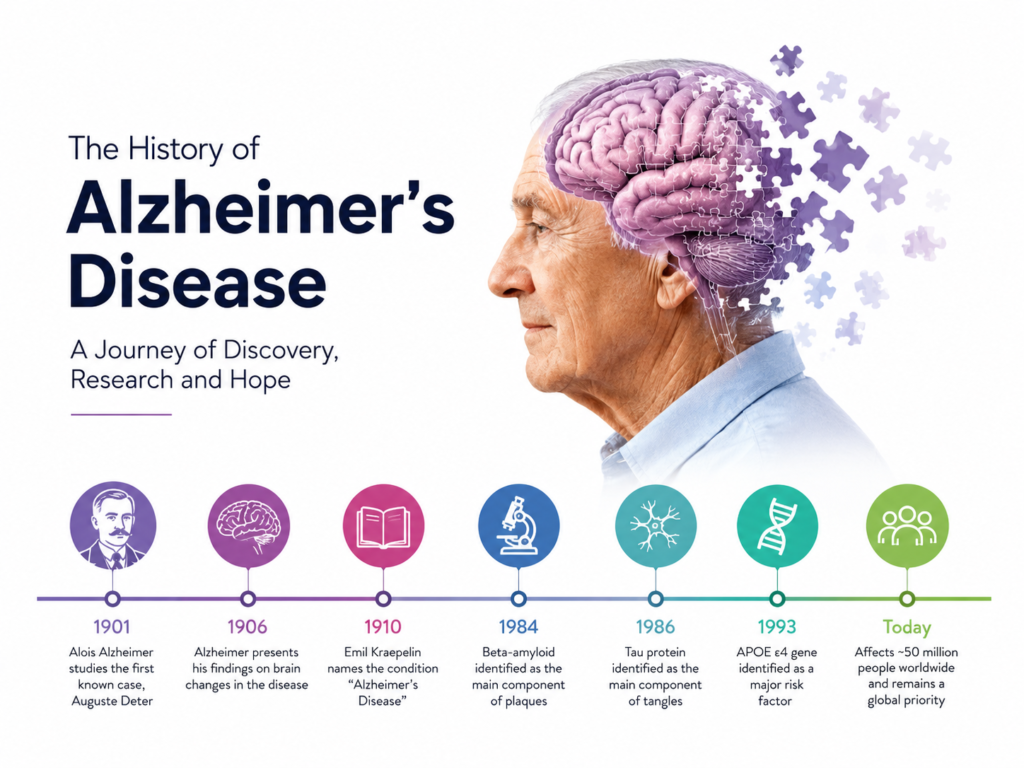

Pingback: History of Alzheimer’s Disease: From Discovery to Modern Neuroscience – Disease Buddy
Pingback: Alzheimer's Disease and Parkinson's Disease: 20 Major Differences - Disease Buddy