
The University of Oxford has launched the world’s first Phase I clinical trial of a vaccine specifically designed to protect against the Bundibugyo ebolavirus. While licensed vaccines are already available for the Zaire ebolavirus, the strain responsible for several major Ebola outbreaks, there is currently no approved vaccine targeting the recent Bundibugyo strain. The trial, led by the Oxford Vaccine Group, aims to evaluate the vaccine’s safety and its ability to stimulate an immune response in healthy volunteers.
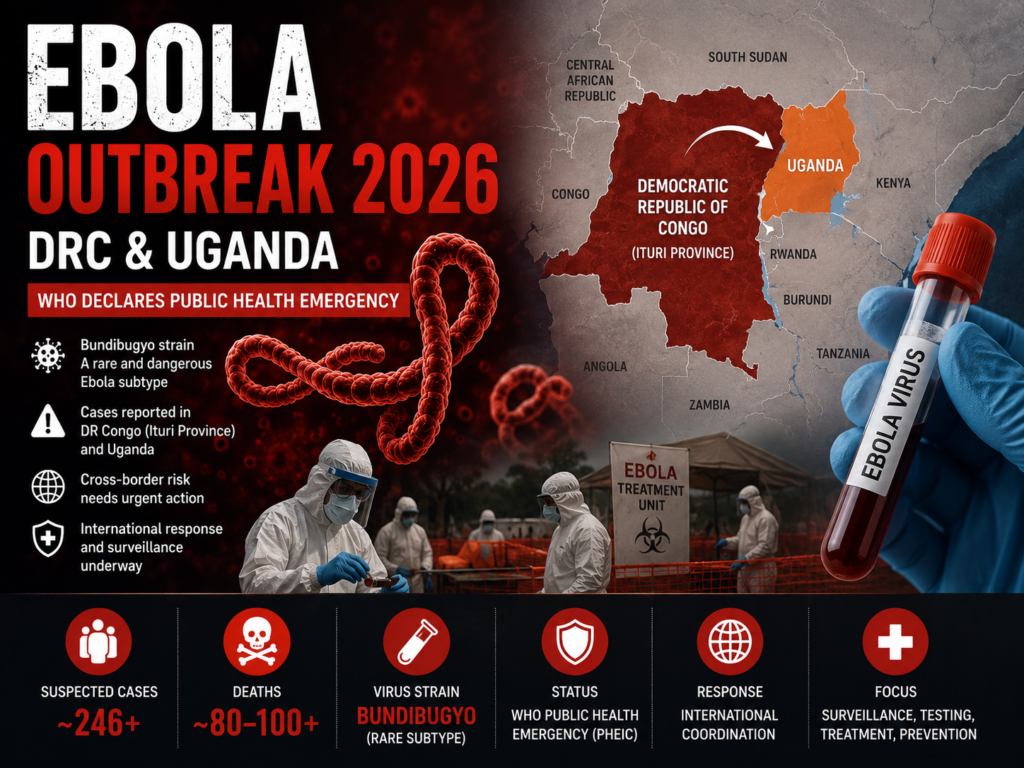
The recent Ebolavirus outbreak has caused 625 deaths with 1792 laboratory confirmed cases.
What is the Bundibugyo Ebola Virus?
Bundibugyo ebolavirus (BDBV) is one of the six known species within the Ebolavirus genus. It was first identified in Uganda in 2007 and named after an outbreak in the Bundibugyo District. Like other Ebola viruses, Bundibugyo ebolavirus causes severe illness characterized by symptoms such as:
- Fever
- Severe headache
- Muscle and joint pain
- Fatigue
- Vomiting and diarrhoea
Bundibugyo strain has a lower reported fatality rate than the Zaire strain. However, it can still cause life-threatening disease causing internal and external bleeding in some severe cases.
Why is Oxford’s Vaccine Trial Important?
The newly launched research is significant because it is the first-ever human clinical trial of a vaccine developed specifically against Bundibugyo ebolavirus.
The trial demonstrates how modern vaccine platforms can respond rapidly to emerging infectious diseases. Researchers learned the importance of a faster paced vaccine development during the COVID-19 pandemic enabling them to design, manufacture and begin testing candidate vaccines much faster than in previous decades.
How the Clinical Trial Works
The study, known as the BD-Ebov Phase I clinical trial, will recruit approximately 50 healthy adult volunteers aged 18-55 years in Oxford, United Kingdom.
Phase I trial focuses on these primary objectives to determine:
- Whether the vaccine is safe
- Whether it produces any significant side effects
- How well it stimulates the body’s immune system
- The most appropriate dosage for future studies
If the results are encouraging, researchers can proceed to Phase II and Phase III clinical trials, where the vaccine’s effectiveness will be evaluated in larger populations. Only after successful completion of these stages and review by regulatory authorities could the vaccine be considered for approval and wider public use.
Why This Vaccine Was Developed So Quickly
One of the reasons Oxford researchers were able to launch the trial relatively quickly is the use of the ChAdOx1 viral vector platform.
This vaccine technology became widely recognised during the COVID-19 pandemic through the Oxford-AstraZeneca vaccine. Scientists can adapt the existing technology by inserting genetic material from different viruses, rather than building an entirely new vaccine platform from scratch. This significantly reduces the time required for laboratory development, manufacturing and regulatory preparation while maintaining rigorous safety standards.
The Historic Comparison of Vaccine Development
Before the 2020s, the undisputed record holder for vaccine development was mumps vaccine in the 1960s, which took four years.
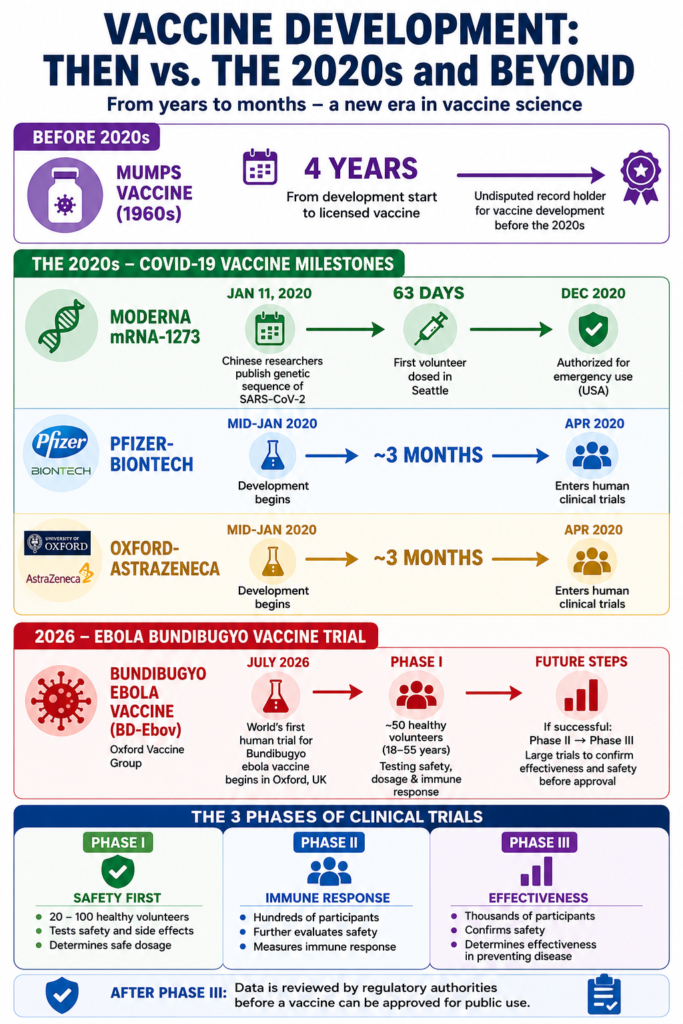
However, during the COVID-19 pandemic, researchers created some milestones.
- Moderna’s COVID-19 Vaccine (mRNA-1273): On January 11, 2020, Chinese researchers published the genetic sequence of SARS-CoV-2. Just 63 days later, the very first volunteer was doesd in Seattle.
- Pfizer-BioNTech & Oxford-AstraZeneca: Both of these vaccines began development in mid-January 2020 and pushed into human clinical trials within 3 months.
| Vaccine | Platform Type | Design to Human Trial | Year |
| Bundibugyo Ebola (Oxford/SII) | Viral Vector (ChAdOx1) | ~ 8 weeks (56 days) | 2026 |
| Moderna COVID-19 | mRNA | ~ 9 weeks (63 days) | 2020 |
| Oxford-AstraZeneca COVID-19 | Viral Vector (ChAdOx1) | ~ 13 weeks | 2020 |
| Pfizer-BioNTech COVID-19 | mRNA | ~ 14 weeks | 2020 |
Frequently Asked Questions
Is there already an Ebola vaccine?
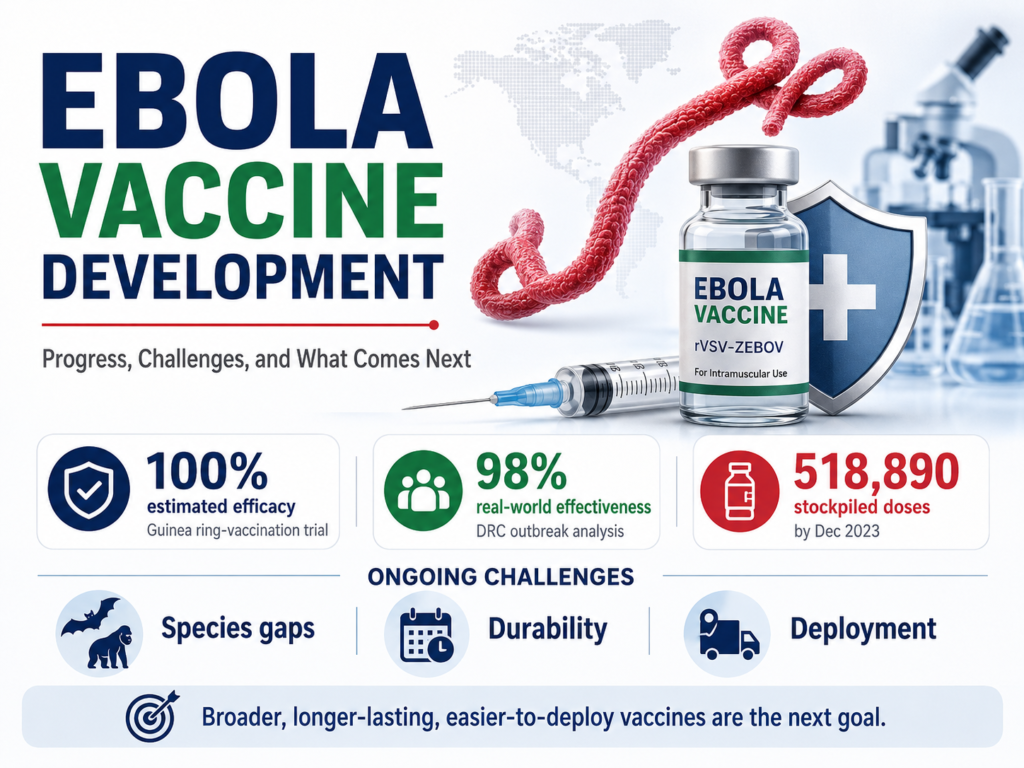
Yes. Licensed vaccines currently exist for the Zaire ebolavirus, which has caused several major outbreaks in Africa. However, these vaccines are not specifically designed for the Bundibugyo strain.
What makes Bundibugyo ebolavirus different?
Bundibugyo ebolavirus is genetically distinct from the Zaire strain. Because immune responses can vary between Ebola virus species, vaccines developed for one strain may not provide complete protection against another.
When could Bundibugyo Ebolavirus vaccine become available?
The vaccine is currently in Phase I clinical testing. If it proves safe and continues to perform well in later clinical trials, regulatory approval could still take several years.
Why are human clinical trials necessary?
Human trials help researchers determine whether a vaccine is safe, identify the appropriate dosage and evaluate immune responses before larger studies assess its effectiveness in preventing disease.
References
BBC News. Oxford begins human trials of Bundibugyo Ebola vaccine.
University of Oxford. World’s first Phase I Bundibugyo ebolavirus vaccine trial launched by Oxford Vaccine Group.
Sky News. Human trials of new Ebola vaccine set to begin in UK.
BBC iPlayer. Oxford University begins human trials of Ebola vaccine.
Pingback: Moderna's First mRNA Flu Vaccine Approved by FDA: 26.6% More Effective Than Traditonal Flu Shots - Disease Buddy