Norovirus: Introduction, Causes, Symptoms, Diagnosis and Treatment
What is Norovirus?

Norovirus infection, often referred to as the “winter vomiting bug,” is a highly contagious cause of acute gastroenteritis characterized by vomiting and diarrhoea. Despite being commonly called “stomach flu,” it is unrelated to Influenza, as it is caused by noroviruses rather than influenza viruses.

Transmission typically occurs through contaminated food or water, as well as contact with infected surfaces or individuals, making it a leading cause of outbreaks in community and healthcare settings. It is also recognized as the primary cause of foodborne illness in the United States.

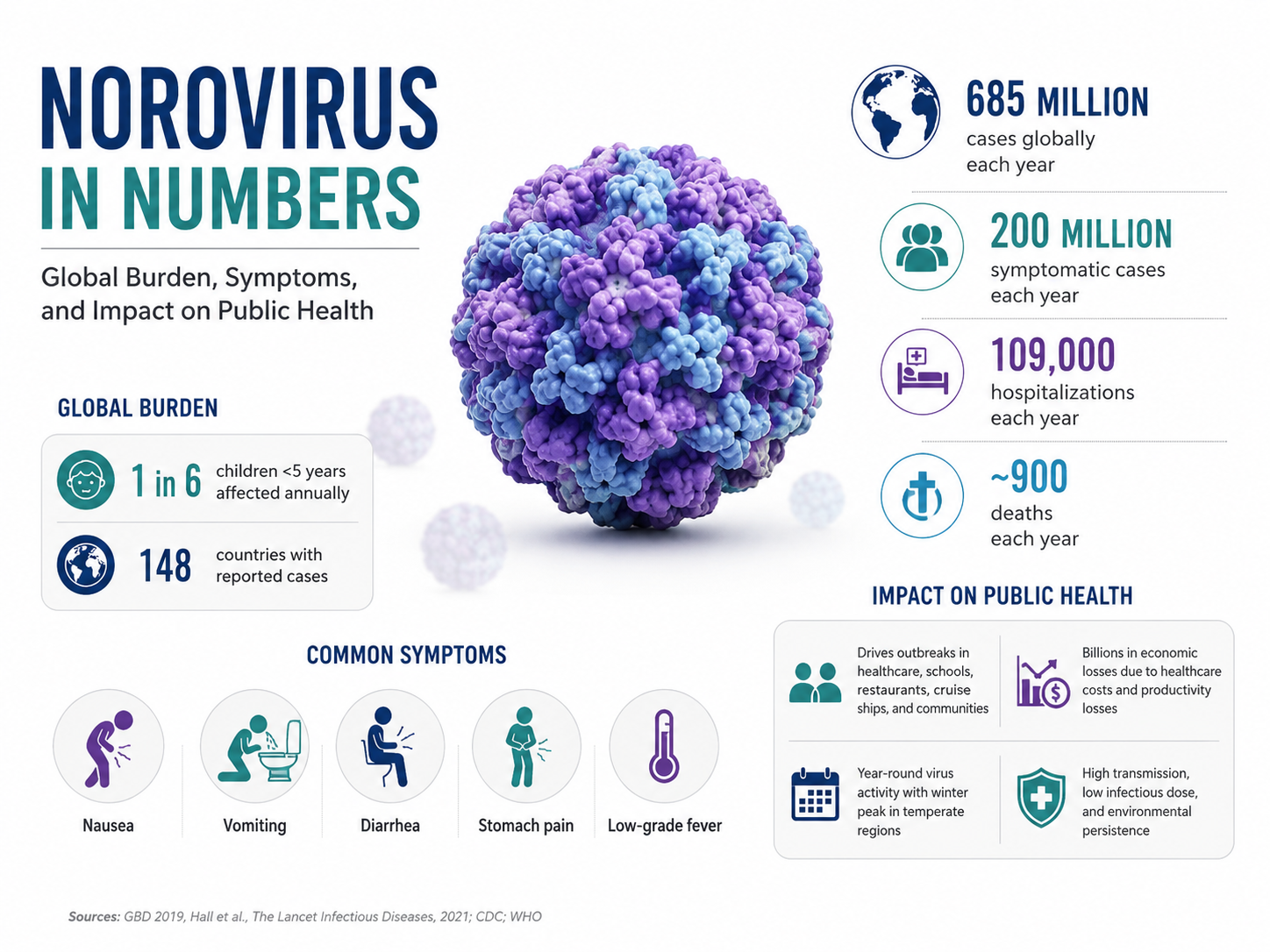
Globally, norovirus imposes a substantial disease burden, with approximately 685 million cases reported annually, including over 200 million cases among children, highlighting its widespread impact across populations.

Infographic showing global impact of Norovirus through cases and deaths statistics
Figure: Norovirus Cases and Deaths Rate

What are the causes of Norovirus?

Norovirus infection is caused by viruses belonging to the Caliciviridae family. Once the virus enters the body, it triggers inflammation of the stomach and intestines, leading to acute gastroenteritis.

Noroviruses are highly resilient and can survive on surfaces and objects for extended periods, ranging from days to weeks, facilitating easy transmission. The virus group is genetically diverse, comprising multiple strains within approximately 10 groups and 48 types, with the GII.4 strain being the most commonly associated with outbreaks worldwide.

Symptoms of Norovirus

Norovirus infection typically presents with a sudden onset of gastrointestinal symptoms, usually appearing 12–48 hours after exposure and lasting for 1–3 days.

Infographic showing symptoms of norovirus including nausea, vomiting, and diarrhoea
Figure: Common symptoms of norovirus infection

Common symptoms:

  • Nausea (feeling sick)
  • Vomiting
  • Diarrhoea

Associated symptoms:

  • Fever (high temperature)
  • Headache
  • Abdominal (tummy) pain
  • Generalized body aches and discomfort

Although often referred to as the “winter vomiting bug,” infection can occur at any time of the year, reflecting its highly contagious nature and widespread presence.

Diagnostics and Treatment of Norovirus

Norovirus infection is diagnosed primarily through laboratory testing that detects viral RNA or antigens, with such diagnostic capabilities widely available in public health and many clinical laboratories.

Currently, there is no specific antiviral treatment for norovirus infection; management is supportive, focusing on symptom relief and maintaining hydration until recovery.

References

https://www.nhs.uk/conditions/norovirus/

https://www.cdc.gov/norovirus/about/index.html

https://www.mayoclinic.org/diseases-conditions/norovirus/symptoms-causes/syc-20355296

https://my.clevelandclinic.org/health/diseases/17703-norovirus

Leave a Comment

Your email address will not be published. Required fields are marked *

Scroll to Top