Artificial intelligence is moving beyond writing text, generating images, and analysing medical data. Scientists are now using AI to work with one of biology’s most fundamental forms of information: DNA.
In August 2026, researchers used artificial intelligence to design new bacteriophages, viruses that infect bacteria, and then demonstrated that some of these AI-designed viruses could function in laboratory experiments.
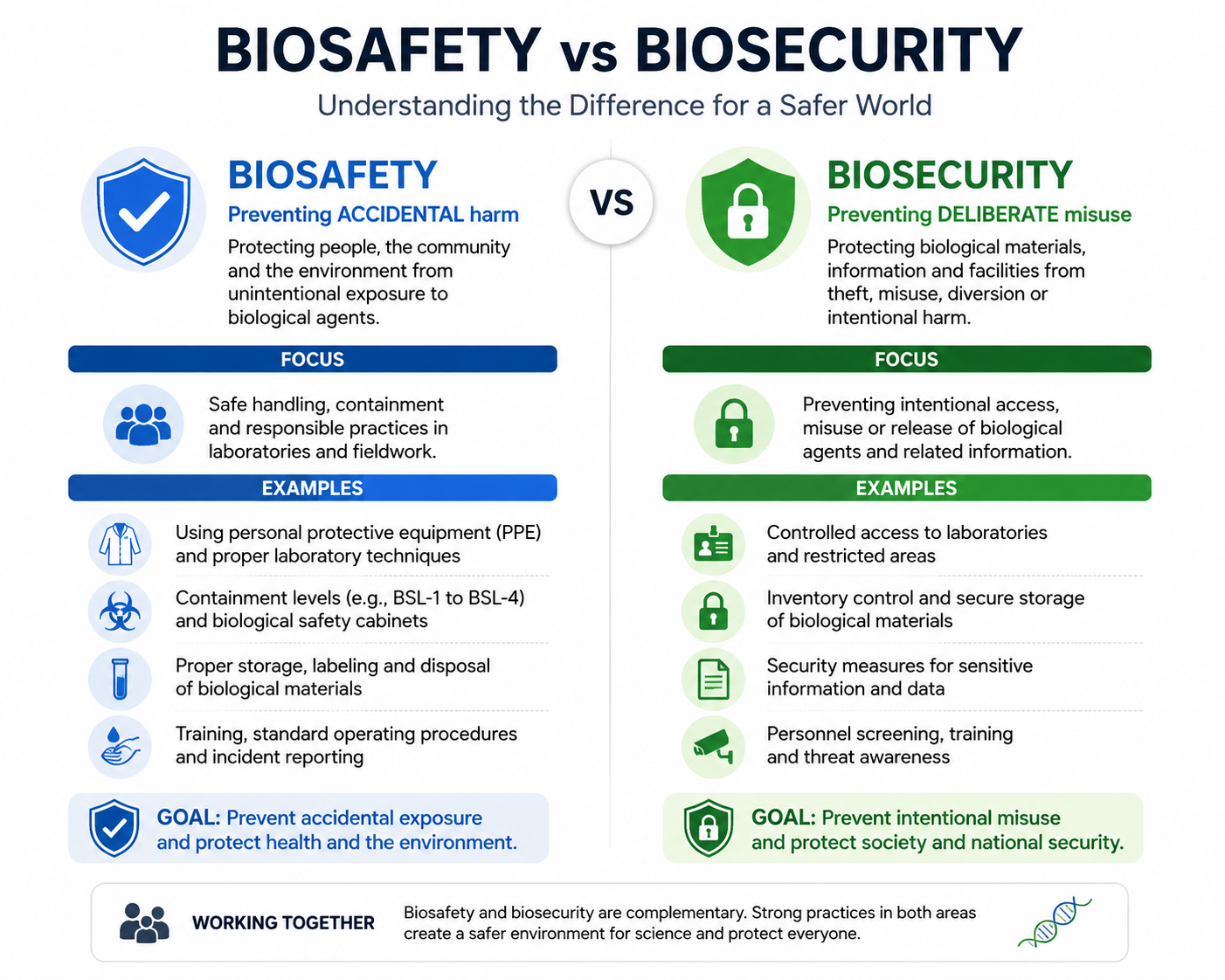
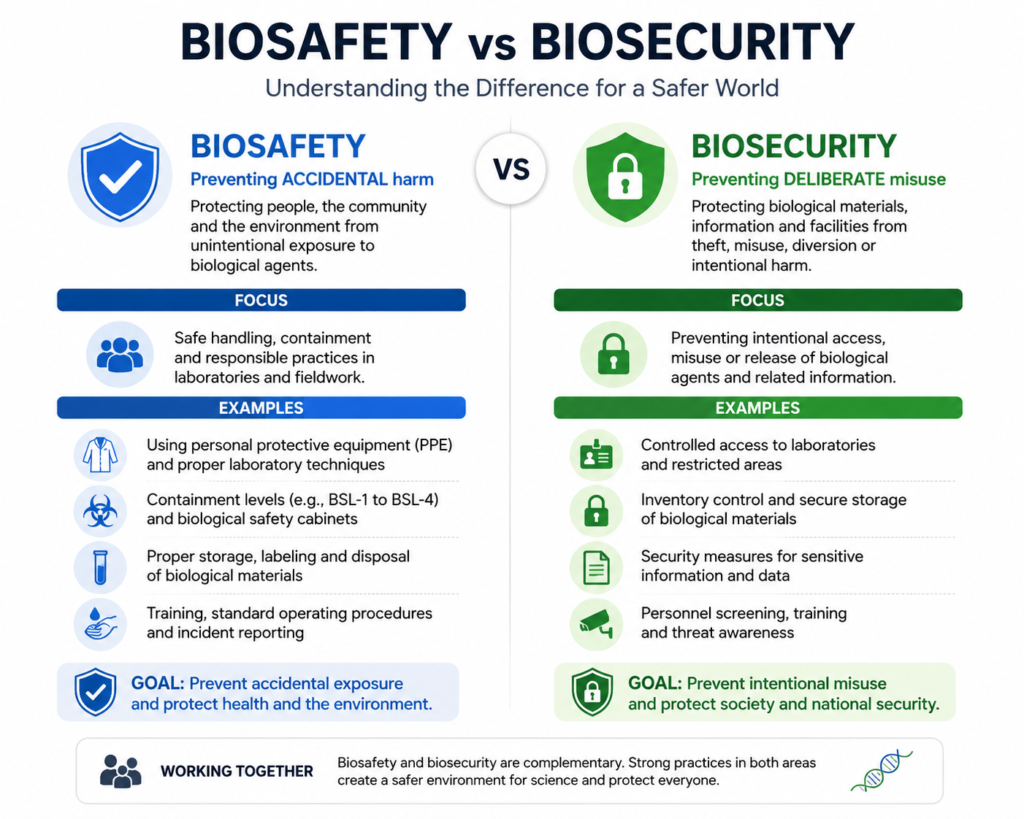
There are concerns about biosafety and biosecurity. However, the finding represents an important milestone for synthetic biology and could eventually contribute to new approaches for treating antibiotic-resistant bacterial infections.
What are bacteriophages?
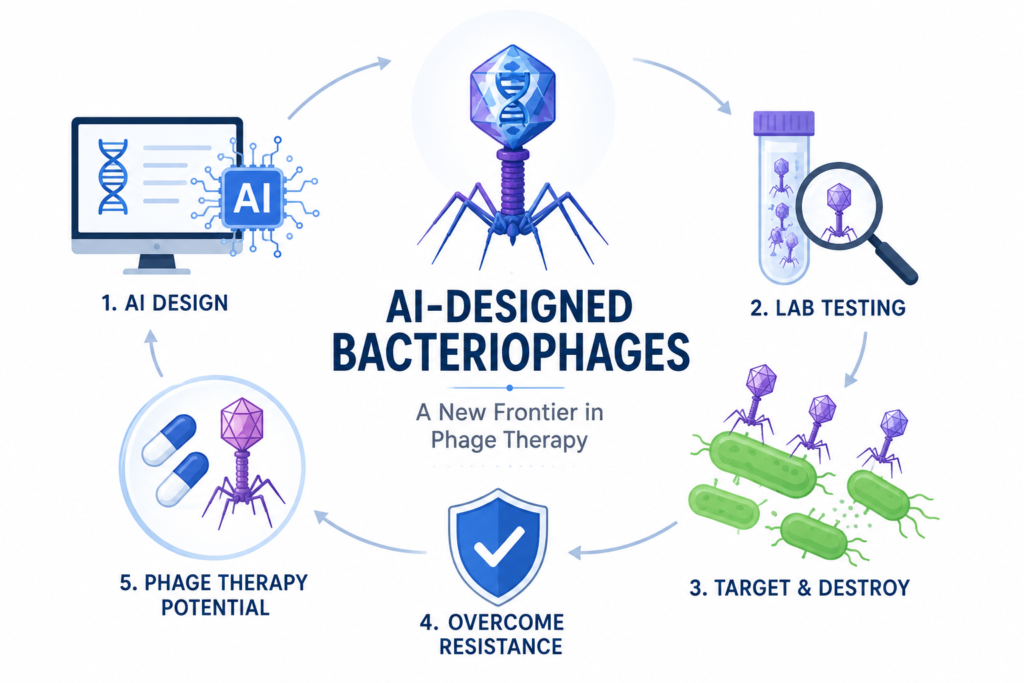
Bacteriophages or phages are viruses that infect bacteria. Phages can destroy bacteria and may potentially be used as an alternative or complement to antibiotics, also known as phage therapy.
How do scientists use AI to design new viral genomes?
Researchers associated with Stanford University and the Arc Institute used genome-focused artificial intelligence models known as Evo 1 and Evo 2.
These systems are different from ordinary chatbots. Instead of primarily learning patterns in human language, genome language models learn patterns within genetic sequences.
Evo 2 was previously described as a biological foundation model trained using an enormous collection of genomic information. Its development demonstrated that AI models can learn complex patterns from DNA and use those patterns for biological prediction and design.
In the new research, scientists applied genome language models to bacteriophage genomes.
The goal was not simply to identify an existing virus. Instead, the researchers wanted to determine whether AI could generate new viral genomes capable of functioning as bacteriophages.
The results provided a proof of concept.
AI-designed viruses ‘bacteriophages’ worked in the laboratory
According to reports, nearly 300 AI-designed viruses were synthesised and experimentally evaluated. Only a small fraction proved viable, with 16 bacteriophages ultimately demonstrating functional activity.
The important point is that these were not simply computer simulations. The researchers were able to take AI-generated genetic designs and test whether they could produce functioning bacteriophages. Some of the resulting phages were able to infect and kill Escherichia coli.
This is significant because it demonstrates that generative AI can move from predicting biological sequences to helping create functional biological systems.
The study was published in Science in August 2026.
Could AI improve phage therapy?
Potentially, yes.
Traditional phage therapy depends heavily on finding naturally occurring bacteriophages that can effectively target a particular bacterial strain. Bacteria can also develop resistance to phages.
AI could eventually help researchers explore the enormous diversity of possible viral genomes more efficiently than conventional approaches alone.
The researchers suggested that rapidly designing bacteriophages and adapting them to particular bacterial targets could expand the possibilities of phage therapy and biotechnology. This is particularly interesting in the context of antimicrobial resistance (AMR).
The World Health Organization considers antimicrobial resistance to be one of the major global health challenges because resistant microorganisms can make infections harder to treat.
Does this mean AI can create a virus that infects humans?
No. Not based on this study.
The researchers deliberately restricted the work to bacteriophages. The training data used for the reported experiment excluded viruses known to infect humans, animals and plants as a precaution intended to reduce the possibility of generating dangerous viruses.
The viruses produced in the study were bacteriophages that target bacteria. The study demonstrates a new technological capability, but it does not demonstrate that AI can currently create a dangerous human pathogen.
Why are scientists concerned about biosecurity?
Researchers may use AI to accelerate the development of useful biological tools. However, the ability to generate biological sequences could also create new challenges for biosecurity if similar technologies were applied to harmful biological systems.
Experts raises urgent biosafety and biosecurity questions. They stressed that the ability to compose viral genomes is advancing faster than the governance frameworks designed to oversee such technologies.
This does not mean that dangerous AI-designed viruses are imminent. Rather, it means that researchers, governments and regulators need to consider the risks before the technology becomes more powerful.
The bigger picture: AI and synthetic biology
The development of AI-designed viruses represents a broader change in biotechnology. For decades, biological engineering has relied on a combination of observation, experimentation and human-designed modifications.
AI introduces another possibility: generative biological design.
The National Academies has previously noted that AI-enabled biological design still faces major limitations, particularly when dealing with complex biological systems and transmissible agents.
The new bacteriophage research does not remove those limitations, but it shows that one important barrier, generating a functional viral genome, can be crossed under controlled experimental conditions.
FAQs (Frequently Asked Questions)
Can AI create viruses?
Recent research demonstrates that AI can generate designs for functional bacteriophage genomes. Scientists subsequently tested these designs experimentally and identified viable bacteriophages. This is an important proof of concept, but it should not be confused with AI independently creating human pathogens.
What are AI-designed viruses?
In the 2026 study, the term refers to bacteriophages whose genetic sequences were designed using genome-focused AI models. These viruses infect bacteria rather than humans.
What are bacteriophages used for?
Bacteriophages are viruses that infect bacteria. They are being investigated for applications including phage therapy, particularly because antimicrobial resistance is making some bacterial infections increasingly difficult to treat.
Can AI-designed bacteriophages treat infections in humans?
Not yet. The recent research was a laboratory proof of concept. Considerable additional research would be required before AI-designed bacteriophages could become an approved medical treatment.
Why is AI-designed virus research controversial?
The technology has potential medical and biotechnology benefits but also raises biosafety and biosecurity questions. Researchers and policymakers need to consider how increasingly powerful biological AI systems can be developed and governed responsibly.
Are AI-designed viruses dangerous to humans?
The bacteriophages reported in this study were designed to target bacteria, and the researchers excluded human, animal and plant viruses from the relevant training data as a safety precaution. The study therefore does not demonstrate the creation of a human-infecting virus.
References
The Guardian, “Safety fears as scientists make first viruses designed by AI,” August 6, 2026.
National Academies of Sciences, Engineering, and Medicine, The Age of AI in the Life Sciences: Benefits and Biosecurity Considerations, 2025.
Brixi et al., “Genome modelling and design across all domains of life with Evo 2,” Nature, 2026.
“Generative design of novel bacteriophages with genome language models,” Science, 2026.
Zakaria et al., “Compounding asymmetries in nucleic acid synthesis screening,” Frontiers in Bioengineering and Biotechnology, 2026.