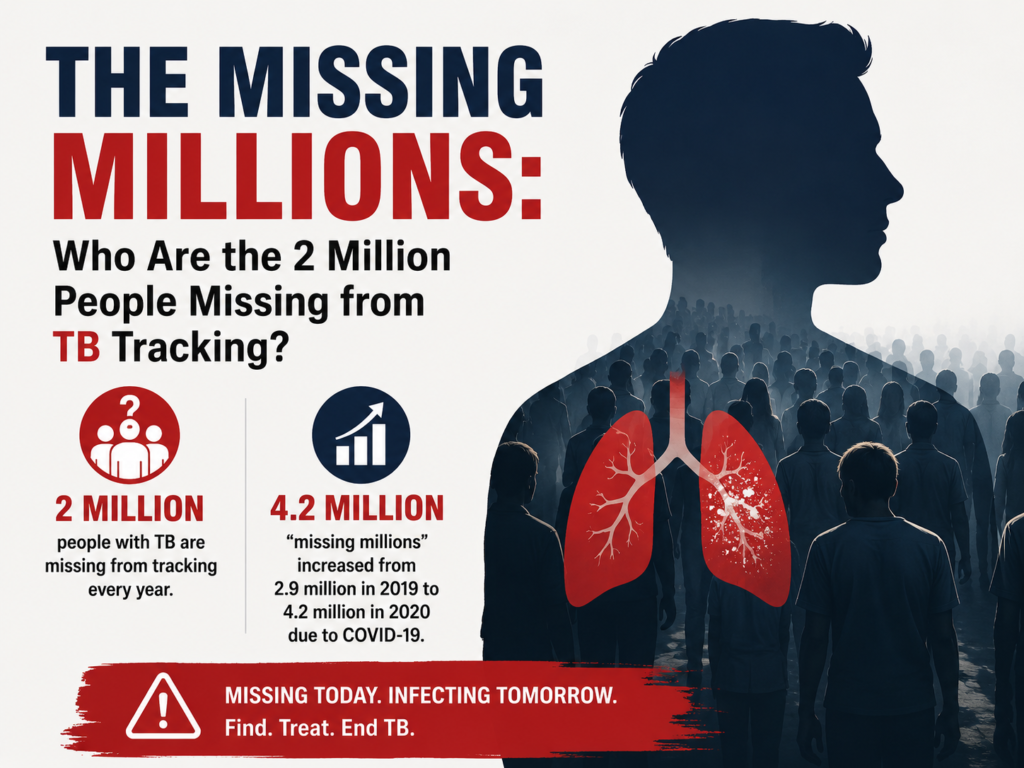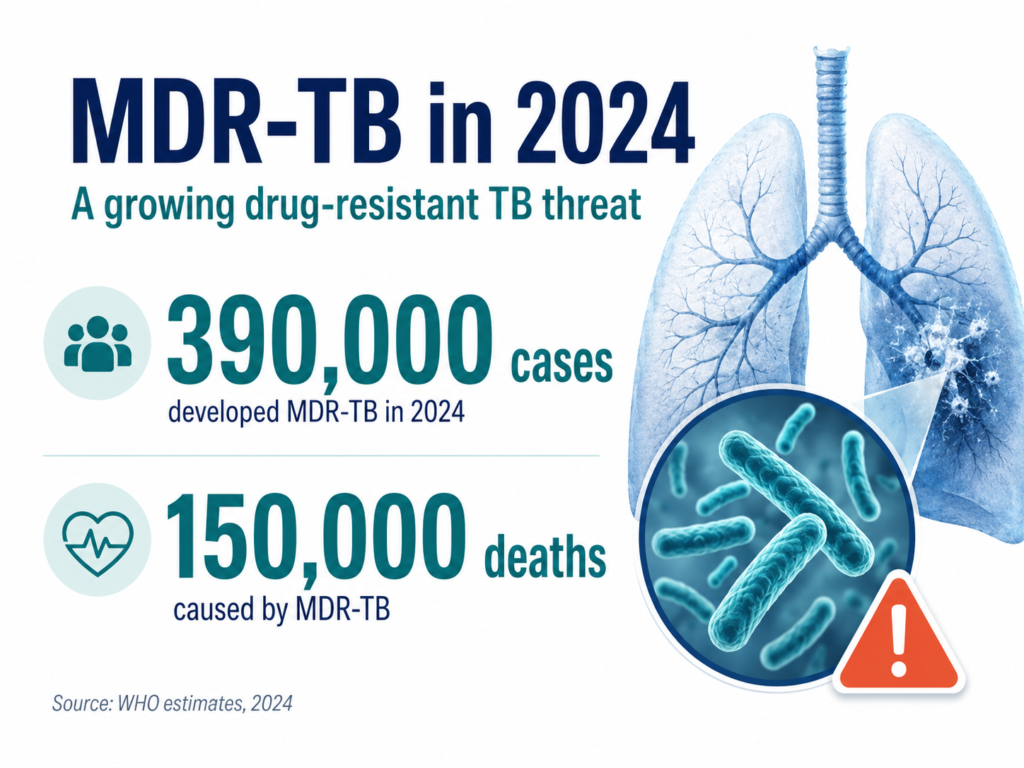
Tuberculosis (TB) remains one of the world’s deadliest infectious diseases, despite the availability of effective diagnostic tests, preventive measures and antibiotic treatment. The problem is not simply the absence of a cure. Millions of people still develop TB every year, while gaps in diagnosis, drug resistance, poverty, delayed treatment and inadequate health-system resources prevent many from receiving timely and effective care.
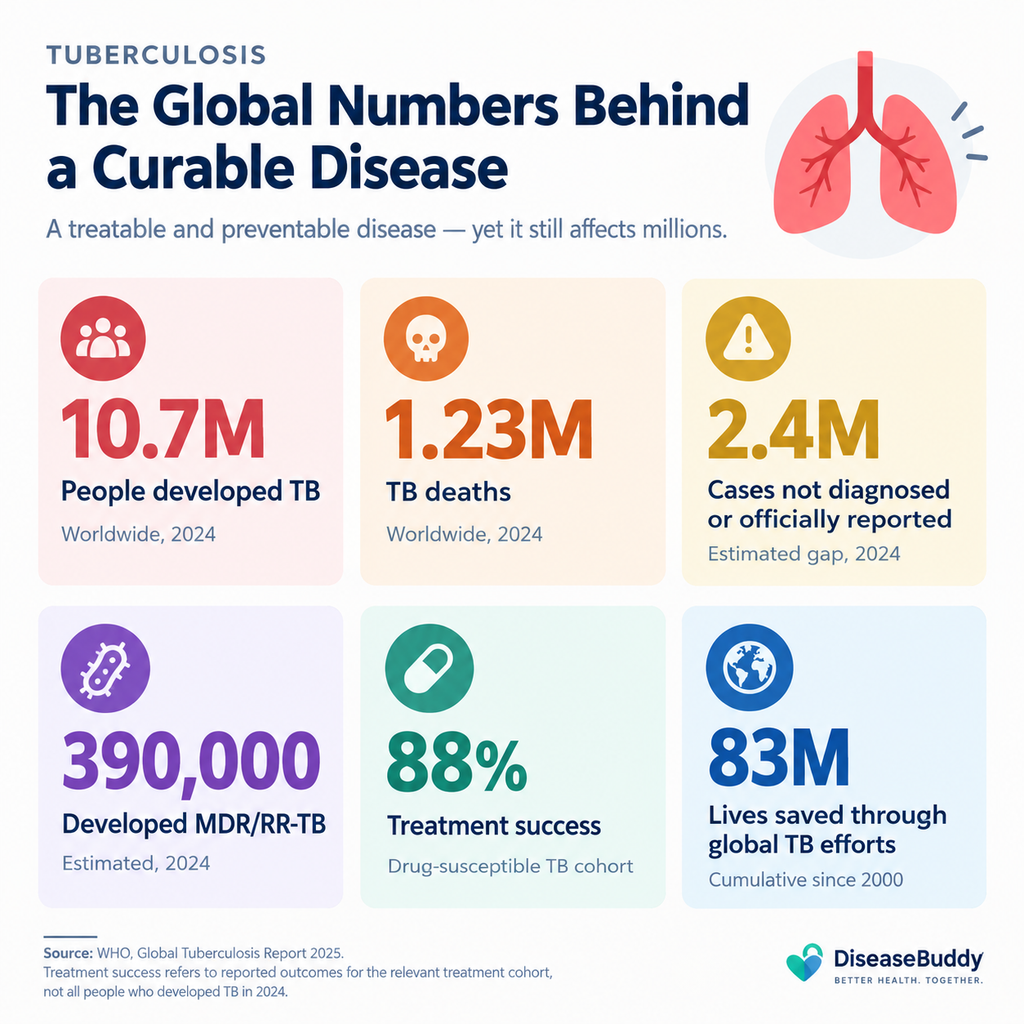
According to the World Health Organization (WHO), an estimated 10.7 million people developed TB and 1.23 million died from the disease in 2024. Although deaths declined slightly compared with 2023, the global burden remains substantial.
Tuberculosis by the numbers: the global burden
TB is caused by Mycobacterium tuberculosis, a bacterium that most commonly affects the lungs, and spreads through air.
The global burden is unevenly distributed. Although TB occurs in every country and affects people of all ages, its impact is concentrated in low- and middle-income countries, where access to healthcare and social protection may be limited.
Global TB statistics for 2024
| Indicator | Global estimate |
| People who developed TB | 10.7 million |
| Deaths from TB, including people with HIV | 1.23 million |
| Deaths among people living with HIV | 150,000 |
| Children and young adolescents who developed TB | 1.2 million |
| People newly diagnosed and officially reported | 8.3 million |
| Estimated people who developed TB but were not diagnosed or reported | Approximately 2.4 million |
| People who developed multidrug- or rifampicin-resistant TB | 390,000 |
| Lives saved through global TB efforts since 2000 | Approximately 83 million |
The difference between estimated TB cases and reported diagnoses is particularly important. Approximately 78% of the estimated 10.7 million people who developed TB were newly diagnosed and reported in 2024. This leaves a substantial gap in case detection and reporting, making it harder to start treatment promptly and interrupt transmission.
Why does TB remain deadly when treatment exists?
1. Millions of cases are missed or diagnosed late
One of the biggest challenges in controlling TB is identifying people with the disease before they become seriously ill or transmit the infection to others.
TB symptoms can develop gradually and may resemble those of other respiratory illnesses. Common symptoms include a persistent cough, fever, night sweats, fatigue, chest pain and unexplained weight loss. Some people experience mild symptoms for months, delaying their decision to seek care.
WHO estimated that approximately 2.4 million people who developed TB in 2024 were not diagnosed or officially reported.
When TB is not identified promptly, several consequences can follow:
- Treatment is delayed, allowing the disease to progress.
- Infectious pulmonary TB may continue to spread within households and communities.
- Patients may experience more severe complications.
- Health authorities may underestimate the true burden of disease.
Social stigma can create an additional barrier to seeking care. A 2025 systematic review published in BMC Public Health, which examined 17 studies, explored how TB-related stigma influences testing and uptake of preventive treatment for TB infection. The findings indicate that fear of discrimination, negative social attitudes and concerns about disclosure can discourage people from engaging with healthcare services. However, because this review focused on TB infection and preventive treatment, its findings should not be interpreted as a direct measurement of diagnostic delays among people with active TB. Addressing stigma through community education, confidential services and respectful patient care remains an important component of broader TB prevention and control efforts.
2. Drug-resistant TB makes treatment more complicated
Multidrug-resistant TB (MDR-TB) is resistant to at least isoniazid and rifampicin, two of the most important first-line TB medicines. Rifampicin-resistant TB (RR-TB) includes disease caused by bacteria resistant to rifampicin, with or without resistance to other medicines.
Drug resistance may be transmitted directly from one person to another. It can also emerge when treatment is inadequate, ineffective or interrupted.
WHO estimated that 390,000 people developed MDR/RR-TB in 2024. Yet only 164,545 people were reported as treated for RR-TB that year, equivalent to approximately 42% of the estimated number who developed it. The figures show a major gap between the need for treatment and the number receiving it.
The financial consequences can be particularly severe for people affected by drug-resistant tuberculosis. A 2023 systematic review and meta-analysis published in Scientific Reports estimated that 81.58% of patients and households affected by multidrug-resistant TB experienced catastrophic costs (95% confidence interval: 74.13–89.04%). Although this estimate was based on a limited set of 11 studies and should not be interpreted as a universal rate, it highlights the intersection between antimicrobial resistance and financial vulnerability. Drug-resistant TB therefore presents two connected challenges: delivering effective treatment for a more difficult infection and ensuring that patients can access and complete care without suffering severe economic hardship.
Drug-resistant TB can require specialised testing and different combinations of medicines. Although shorter, all-oral treatment regimens are now available for eligible patients, these treatments still require appropriate clinical assessment, monitoring and reliable access to medicines.
3. Poverty and the financial burden of treatment
TB is closely linked to the social conditions in which people live. Undernutrition, overcrowded housing, poor ventilation, insecure employment and limited access to healthcare can increase vulnerability to infection, disease progression or delayed treatment.
The financial burden can also make recovery harder. Patients may lose income because they are unable to work, while families may need to pay for transportation, food, accommodation or additional care. Even when TB medicines are provided free of charge, these indirect and non-medical expenses can be substantial.
WHO’s 2025 report found that, across 40 countries with available national survey data, 47% of TB-affected households experienced catastrophic total costs. Catastrophic costs are defined as total TB-related costs exceeding 20% of annual household income or expenditure. Among households affected by drug-resistant TB in the 37 countries reporting disaggregated data, the pooled estimate was 82%.
Research published in PLOS Global Public Health in 2025 further illustrates the financial burden of tuberculosis care. A systematic review of 76 studies found substantial variation in the total costs incurred by patients, with reported costs ranging from US$7.13 to US$11,329 per person across the included settings. These differences reflect variations in healthcare systems, treatment pathways, and the direct and indirect costs associated with illness. The findings demonstrate why providing TB medicines free of charge may not be sufficient to protect patients financially: transport, accommodation, lost earnings and other expenses can still place considerable pressure on household budgets.
4. HIV, diabetes and undernutrition increase vulnerability
WHO estimates that approximately one-quarter of the world’s population has been infected with TB bacteria. Around 5–10% of infected people are expected to develop TB disease during their lifetime, although the risk varies considerably with age, immune status and other factors.
Certain conditions increase the risk of progression from infection to active disease.
- HIV: Weakening of the immune system substantially increases the risk of active TB. WHO estimates that people living with HIV are about 12 times more likely to develop TB disease than people without HIV.
- Undernutrition: Poor nutritional status can weaken immune defences and is an important contributor to the global TB burden.
- Diabetes: Diabetes increases the risk of developing TB and can complicate clinical management.
- Tobacco and harmful alcohol use: Both are associated with increased TB risk and poorer health outcomes.
WHO estimated that, in 2024, approximately 970,000 new TB cases were attributable to undernutrition, 930,000 to diabetes, 740,000 to alcohol use disorders, 700,000 to smoking and 570,000 to HIV infection.
5. Health-system funding and research gaps
Effective TB control requires more than medicines. Health systems need laboratories, trained staff, contact tracing, preventive treatment, surveillance systems and continuous supplies of quality-assured medicines.
Yet funding remains far below global commitments. WHO reported that low- and middle-income countries had approximately US$5.9 billion available for TB prevention, diagnosis and treatment in 2024, compared with a global target of US$22 billion annually by 2027.
That is only about 27% of the annual funding target. The shortfall limits the ability of many countries to expand diagnosis, treat drug-resistant infections, protect vulnerable households and prevent future cases.
Research funding is also insufficient. The global target established for TB research is US$5 billion annually by 2027.
New diagnostics, improved vaccines, more accessible preventive treatment and effective shorter treatment regimens could accelerate progress. However, innovation alone will not end TB if health systems cannot deliver these advances to the people who need them.
Is tuberculosis really curable?
Yes. TB is curable in most cases when the correct treatment is started and completed under appropriate clinical supervision. Treatment depends on the type of TB, the medicines to which the bacteria are susceptible, the patient’s clinical circumstances and national or WHO guidance.
For drug-susceptible TB, treatment usually involves a combination of antibiotics taken over several months. Drug-resistant disease requires specialised regimens selected according to resistance patterns and individual eligibility.
WHO reported the following treatment success rates for people treated for TB:
| Type of TB | Treatment success rate |
| Drug-susceptible TB | 88% |
| Rifampicin-resistant TB | 71% |
These figures show both what treatment can achieve and where further improvement is needed. An 88% treatment success rate for drug-susceptible TB is encouraging, but it also means that not every person in the reported cohort had a successful documented outcome. For drug-resistant TB, the lower success rate reflects a more difficult treatment challenge.
It is also important to distinguish TB infection from active TB disease. People with TB infection generally do not have symptoms and cannot transmit TB. Preventive treatment can reduce the risk of progression to active disease in eligible individuals after appropriate clinical assessment.
Where is the global TB burden concentrated?
The burden of TB differs substantially by region and country. In 2024, the WHO South-East Asia Region accounted for approximately 34% of incident cases, the Western Pacific Region for 27%, and the African Region for 25%.
Eight countries accounted for approximately two-thirds of all people who developed TB in 2024:
| Country | Share of global incident TB cases |
| India | 25% |
| Indonesia | 10% |
| Philippines | 6.8% |
| China | 6.5% |
| Pakistan | 6.3% |
| Nigeria | 4.8% |
| Democratic Republic of the Congo | 3.9% |
| Bangladesh | 3.6% |
The regional distribution also illustrates why TB control requires international cooperation. Stronger detection and treatment programmes, cross-border collaboration, equitable access to diagnostics and sustained funding can benefit both high-burden and lower-burden settings.
What would it take to reduce TB deaths?
5. What would it take to reduce TB deaths?
Reducing TB mortality requires a coordinated public-health response that addresses the full pathway from infection to diagnosis, treatment and prevention.
Earlier diagnosis: Wider access to rapid molecular diagnostic tests can help identify TB and detect resistance more quickly. Healthcare services should also improve access for people who face financial, geographical or social barriers.
Effective treatment: Patients need the correct medicines, support to manage adverse effects and continuity of care. Drug-susceptibility testing can help guide treatment where indicated.
Preventive treatment: Eligible people at increased risk of progressing from TB infection to active disease should be assessed for preventive treatment in line with clinical guidance.
Better integration of TB and HIV services: Coordinated testing, preventive measures and treatment can reduce deaths associated with TB and HIV.
Social and financial protection: Reducing transport costs, income loss, food insecurity and stigma can make it easier for patients to access services and complete treatment.
Sustained investment and research: Governments and international partners need to close the funding gap while supporting improved diagnostics, vaccines, medicines and surveillance systems.
WHO’s End TB Strategy sets ambitious goals for reducing TB incidence and deaths. However, the estimated reduction in the global TB incidence rate between 2015 and 2024 was only about 12%, far below the strategy’s milestone of a 50% reduction by 2025. This shows that progress has occurred, but not quickly enough to meet the original target.
Frequently Asked Questions (FAQs)
1. Why does tuberculosis still kill people if it is curable?
TB deaths continue because some people are diagnosed late, lack access to effective treatment, develop drug-resistant disease or face medical and social conditions that make successful treatment more difficult.
2. How many people died from tuberculosis in 2024?
WHO estimated that 1.23 million people died from TB in 2024, including approximately 150,000 people living with HIV.
3. How many people developed TB in 2024?
An estimated 10.7 million people developed TB worldwide in 2024. This included approximately 1.2 million children and young adolescents.
4. Is tuberculosis completely curable?
Most drug-susceptible TB can be cured with appropriate antibiotic treatment. Drug-resistant TB is more complicated to treat, but effective regimens are available for many patients. Individual treatment outcomes depend on resistance patterns, clinical circumstances and access to appropriate care.
5. Can tuberculosis be prevented?
Yes. Prevention includes early identification and treatment of infectious cases, preventive treatment for eligible people with TB infection, appropriate vaccination policies, improved ventilation and infection-control measures, and action on risk factors such as undernutrition and HIV.
References
- World Health Organization. Global tuberculosis report 2025. Geneva: WHO; 2025. Available from: https://www.who.int/timorleste/publications/i/item/9789240116924
- World Health Organization. Tuberculosis. Fact sheet. Updated March 24, 2026. Available from: https://www.who.int/news-room/fact-sheets/detail/tuberculosis
- World Health Organization. WHO consolidated guidelines on tuberculosis: Module 3: Diagnosis—rapid diagnostics for tuberculosis detection. WHO guidance and resources. Available from: https://www.who.int/teams/global-tuberculosis-programme
- World Health Organization. WHO consolidated guidelines on tuberculosis: Module 4: Treatment—drug-resistant tuberculosis treatment. WHO guidance and resources. Available from: https://www.who.int/teams/global-tuberculosis-programme
- World Health Organization. Global tuberculosis report 2025: Costs faced by people with TB and their households, social protection and human rights. Available from: https://www.who.int/teams/global-tuberculosis-programme
- World Health Organization. WHO consolidated guidelines on tuberculosis: Module 1: Prevention—tuberculosis preventive treatment. 2nd ed. Geneva: WHO; 2024. Available from: https://www.ncbi.nlm.nih.gov/books/NBK607291/
- World Health Organization. Global tuberculosis report 2025: Financing for TB prevention, diagnostic and treatment services. Available from: https://www.who.int/teams/global-tuberculosis-programme
- D’Silva OA, et al. The catastrophic cost of TB care: Understanding costs incurred by individuals undergoing TB care in low-, middle-, and high-income settings – A systematic review. PLOS Global Public Health. 2025;5(4):e0004283. https://doi.org/10.1371/journal.pgph.0004283
- Akalu TY, Clements ACA, Wolde HF, Alene KA. Economic burden of multidrug-resistant tuberculosis on patients and households: a global systematic review and meta-analysis. Scientific Reports. 2023;13:22361. https://doi.org/10.1038/s41598-023-47094-9
- Kılıç A, et al. A systematic review exploring the role of tuberculosis stigma on test and treatment uptake for tuberculosis infection. BMC Public Health. 2025;25:628. https://doi.org/10.1186/s12889-024-20868-0