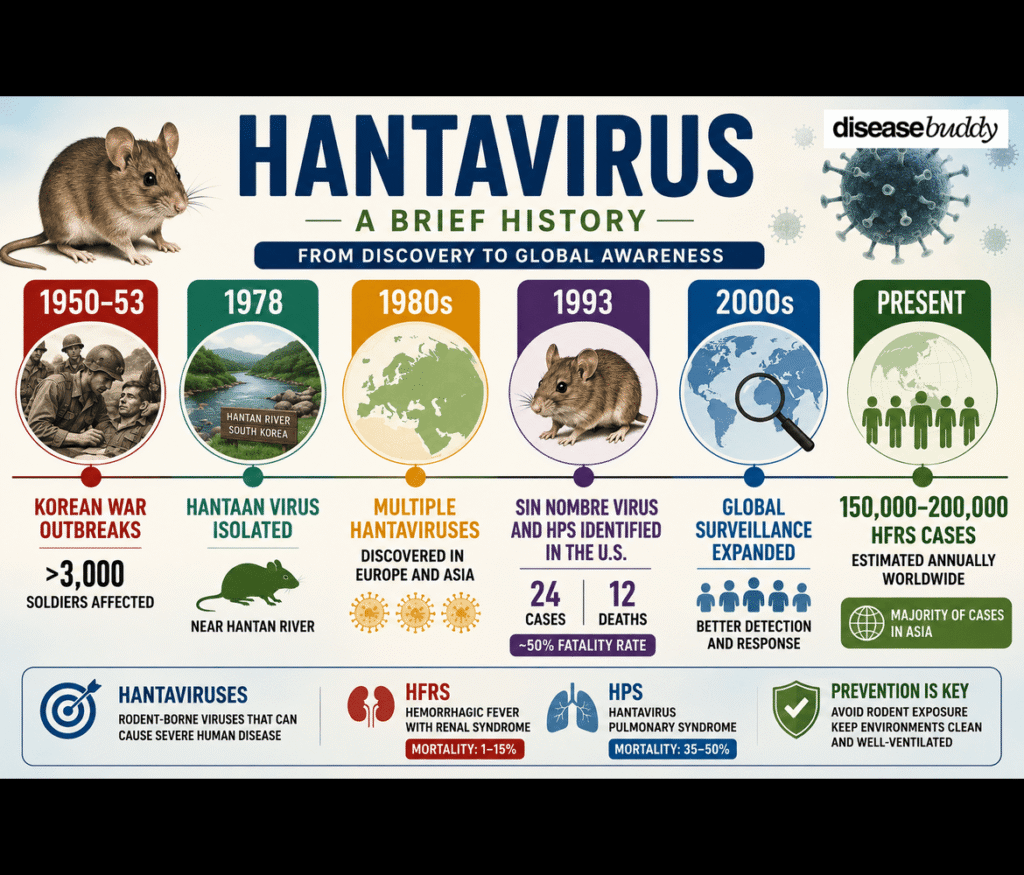
Legionnaires’ disease is a severe form of pneumonia caused by Lagionella pneumophila. Although Legionnaires’ disease was officially identified in 1976, evidence later showed that Legionella had been causing human infections decades earlier. Today, it is recognized as an important waterborne infection worldwide.
Early Evidence: Legionella Before Its Discovery
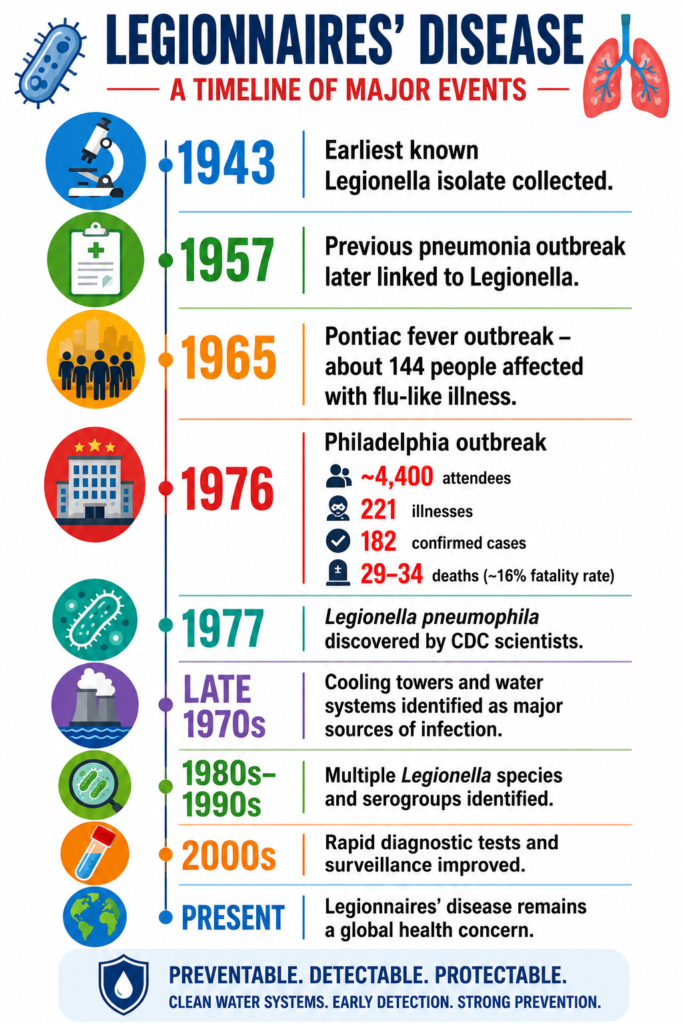
Several pneumonia outbreaks occured around the world before Legionella was discovered. Later investigations revealed that some of these cases were caused by the same bacteria responsible for Legionnaires’ disease.
| Year | Event | Key Findings |
| 1943 | Earliest known Legionella isolate | A bacterial sample showed that Legionella existed decades before its discovery. |
| 1957 | Retrospective outbreak identification | A previous pneumonia outbreak was later linked to Legionella after improved diagnostics methods became available. |
| 1965 | Pontiac, Michigan Outbreak | A flu-like illness was developed in around 144 people without pneumonia, later recognized as Pontiac fever, a milder form of legionellosis. |
Philadelphia Outbreak 1976: The Birth of Legionnaires’ Disease
In July 1976, many participants attending the American Legion Convention held at the Bellevue-Stratford Hotel in Philadelphia, USA developed severe pneumonia. A total of 221 illness were reported with 182 confirmed cases out of 4400 people. 29-34 deaths were recorded with 16% fatality rate.
The outbreak was initially a mystery because routine laboratory tests failed to identify the cause. The disease was eventually named Leionnaires’ disease because many affected individuals were members of the American Legion.
Discovery of the Bacteria: Legionella pneumophila
In January 1977, researchers at the CDC successfully isolated the organism responsible for the outbreak. The newly discovered bacterium was named Legionella pneumophila.
- Legionella – named after the affected American Legion members
- pneumophila – meaning “lung-loving,” reflecting its ability to cause pneumonia
Research and Identification of Multiple Species
During 1980s, researchers found that Legionella was not a single organism but a diverse group of bacteria. Multiple species and serogroups were identified during this period. During 1990s and 2000s, improved culture methods and environmental surveillance developed, molecular testing, PCR, and urinary antigen tests improved diagnosis.
By the 2000s:
- More than 58 Legionella species had been identified
- Around 25 species are known to be harmful
- L. pneumophila serogroup 1 remained the most common cause of human disease
Legionnaires’ Disease in the 21st Century
Despite major advances in diagnosis and prevention, Legionnaires’ disease continues to cause outbreaks worldwide. Recent cases, including the 2026 outbreak reported in the New York City, highlight that Legionella remains a persistent public health challenge, especially in urban environments with complex water systems. More than four decades after the discovery of the bacteria, effective water management, rapid detection, and public health surveillance remain essential to prevent further infections and protect vulnerable populations.
References
Fraser, D. W., Tsai, T. R., Orenstein, W., Parkin, W. E., Beecham, H. J., Sharrar, R. G., Harris, J., Mallison, G. F., Martin, S. M., McDade, J. E., Shepard, C. C., & Brachman, P. S. (1977). Legionnaires’ disease: Description of an epidemic of pneumonia. New England Journal of Medicine, 297(22), 1189–1197. https://doi.org/10.1056/NEJM197712012972201
Fields, B. S., Benson, R. F., & Besser, R. E. (2002). Legionella and Legionnaires’ disease: 25 years of investigation. Clinical Microbiology Reviews, 15(3), 506–526. https://doi.org/10.1128/CMR.15.3.506-526.2002
Honigsbaum, M. (2016). Legionnaires’ disease: Revisiting the puzzle of the century. The Lancet, 388(10043), 456–457. https://doi.org/10.1016/S0140-6736(16)31158-8
McDade, J. E., Shepard, C. C., Fraser, D. W., Tsai, T. R., Redus, M. A., & Dowdle, W. R. (1977). Legionnaires’ disease: Isolation of a bacterium and demonstration of its role in other respiratory disease. New England Journal of Medicine, 297(22), 1197–1203. https://doi.org/10.1056/NEJM197712012972202
Winn, W. C., Jr. (1988). Legionnaires’ disease: Historical perspective. Clinical Microbiology Reviews, 1(1), 60–81. https://doi.org/10.1128/CMR.1.1.60
Mercante, J. W., & Winchell, J. M. (2015). Current and emerging Legionella diagnostics for laboratory and outbreak investigations. Clinical Microbiology Reviews, 28(1), 95–133. https://doi.org/10.1128/CMR.00029-14