Introduction
Chagas disease, also known as American trypanosomiasis, is a neglected tropical disease caused by the protozoan parasite Trypanosoma cruzi. The disease is often called a “silent disease” because Chagas disease can remain hidden inside the human body for years or even decades before causing severe complications.
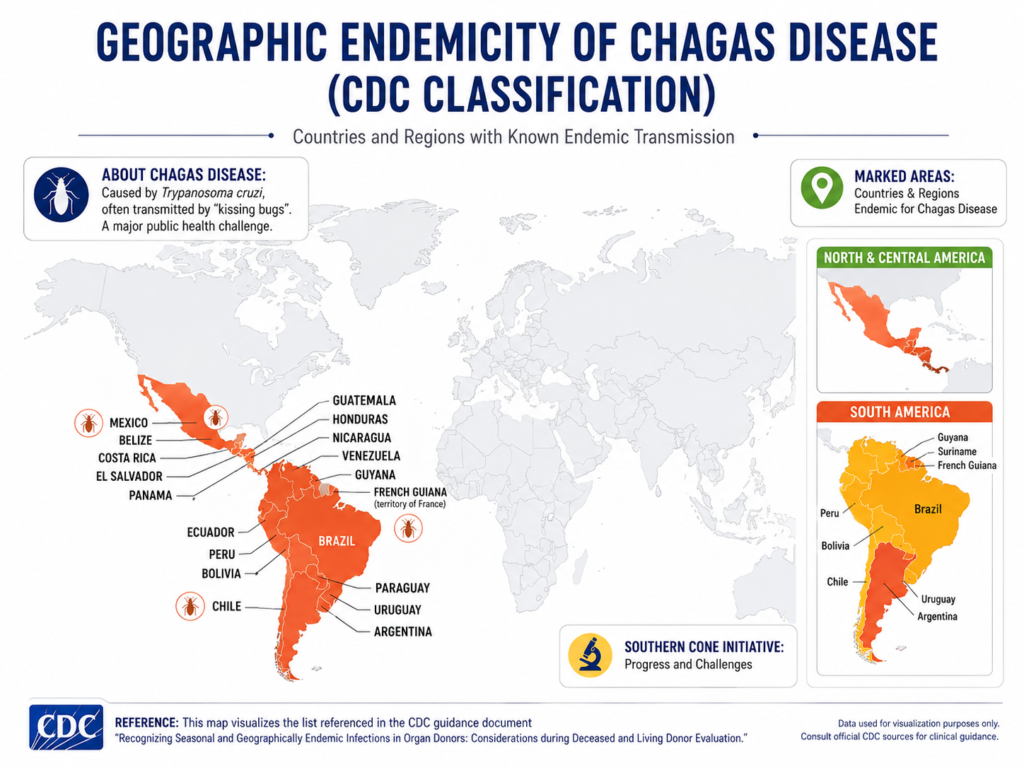
The disease is mainly found in 21 continental Latin American countries and approximately 75 million people are at risk of infection globally.
History of Chagas Disease
Discovered in 1909 by Brazilian physician and researcher Carlos Riberiro Justiniano Chagas, Chagas disease remains one of the most unique discoveries in medical history.
The disease came into notice while investigating malaria control efforts in Brazil by Chagas. He later demonstrated that the same organism could infect humans and animals. The parasite was named Trypanosoma cruzi in honour of Brazilian scientist Oswaldo Cruz.
Carlos Chagas identified the causative parasite, insect vector responsible for transmission, the clinical features of the disease, and the animal reservoirs involved in the transmission cycle. It is one of the rarest thing in history where a single researcher described almost the entire life cycle of an infectious disease.
For decades, Chagas disease was considered mainly a rural disease affecting poor communities in Latin America. However, changes in population movement, urbanisation, and international migration have altered its distribution. Today, infections have been detected in North America, Europe, and other regions outside traditional endemic areas.

How is Chagas Disease Transmitted?
Triatomine Bug Transmission (Traditional Route)
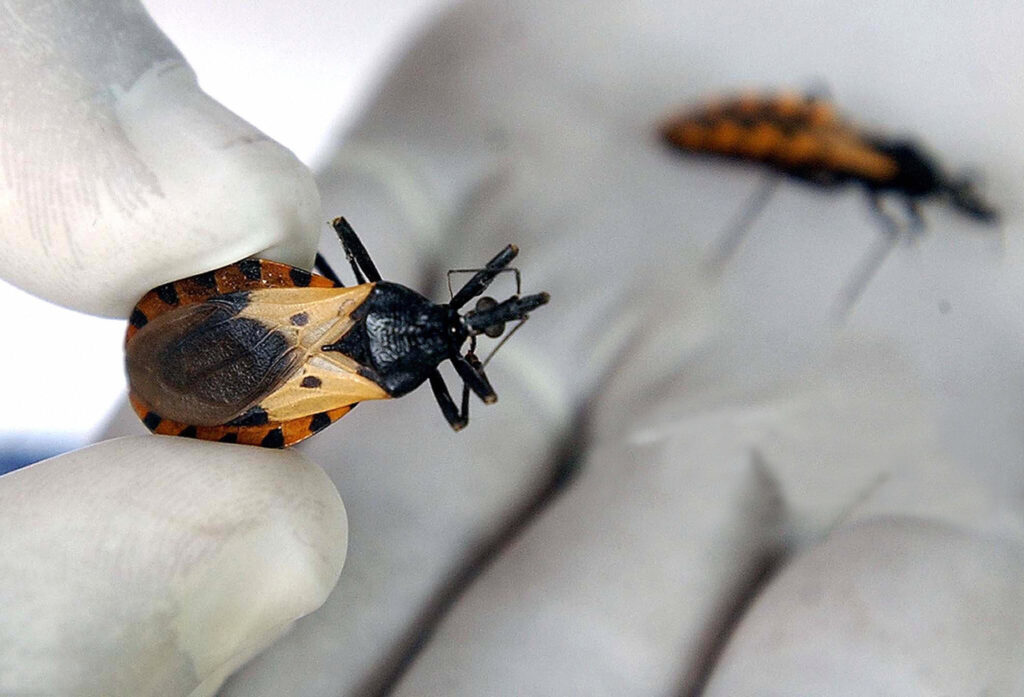
The main historical route of transmission occurs through infected triatomine bugs, also known as kissing bugs.
The insect becomes infected after feeding on an infected human or animal. Later, when it feeds on another person, parasites present in the insect’s faeces can enter the body through broken skin, scratches, or mucous membranes such as the eyes or mouth.
This transmission cycle is especially associated with rural areas where housing conditions allow insects to live close to humans.
Congenital Transmission (Mother to Baby)
An infected pregnant woman can transmit the T. cruzi parasite to her child during pregnancy or childbirth.
Blood Transfusion and Organ Transplantation
Another method of Chagas disease transmission is through infected blood products and donated organs.
Foodborne Transmission
Chagas disease outbreaks have occurred after consuming food or drinks, especially contaminated fruits or juices, poor food handling practices, and accidental contamination by infected insects.
Global Burden of Chagas Disease: Key Numbers
| Indicator | Number |
| Cause | Trypanosoma cruzi |
| Estimated infected people worldwide | ~8 million |
| People at risk globally | ~75 million |
| Annual deaths | >10,000 |
| Endemic countries in Latin America | 21 countries |
| Estimated cases in the United States | ~280,000 |
| Chronic patients developing heart complications | Up to one-third |
Why is Chagas Disease Called a Silent Killer?
Chagas disease is known as a silent killer due to its ability to remain unnoticed. The typical progression is:
Acute infection – Indeterminate phase – Chronic disease
Many people enter the chronic stage without ever knowing they were infected. Patients may develop enlarged heart, heart rhythm abnormalities, heart failure, and enlargement of the oesophagus or colon.
According to WHO, without early diagnosis and treatment, up to one-third of people with chronic infection develop cardiac complications, including cardiomyopathy, heart rhythm abnormalities, and heart failure. Around 1 in 10 develop digestive, neurological, or mixed complications.
References
Rassi, A. Jr., Rassi, A., & Marin-Neto, J. A. (2010). Chagas disease.The Lancet, 375(9723), 1388–1402. https://doi.org/10.1016/S0140-6736(10)60061-X
Bern, C. (2015). Chagas’ disease.New England Journal of Medicine, 373, 456–466.
Rassi, A., Rassi, A., & Little, W. C. (2000). Chagas’ heart disease.Clinical Microbiology Reviews, 13(4), 400–419.
https://doi.org/10.1128/CMR.13.4.400
Pérez-Molina, J. A., & Molina, I. (2018). Chagas disease.The Lancet, 391(10115), 82–94.
https://doi.org/10.1016/S0140-6736(17)31612-4
Lidani, K. C. F., et al. (2023). Chagas disease: From discovery to current challenges.The Lancet Infectious Diseases.
https://doi.org/10.1016/S1473-3099(23)01787-7