
What is Measles?
Measles is a highly contagious viral disease caused by the measles virus, a member of the Morbillivirus genus within the Paramyxoviridae family. It primarily affects the respiratory system before spreading throughout the body, causing fever, respiratory symptoms, and a characteristic skin rash.
Why is Measles a Public Health Concern?
Measles is one of the most contagious human infectious diseases, because of which approximately 95% vaccination coverage is required within communities to prevent sustained transmission.
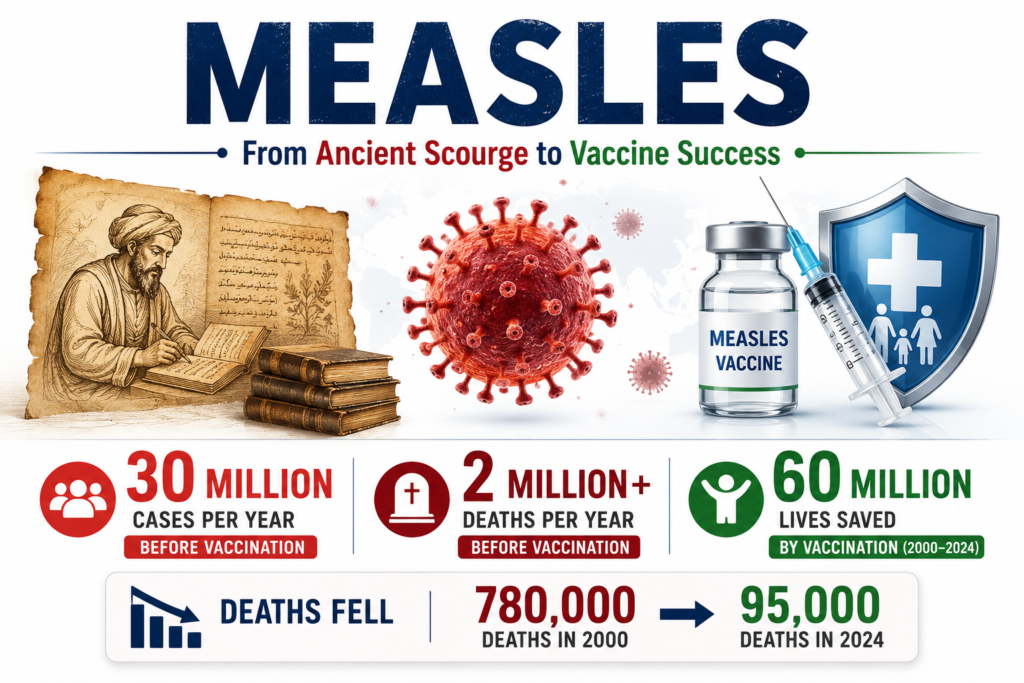
The transmission of virus through airborne respoiratory particles had caused large outbreaks every few years and caused millions of infections and deaths globally, during the pre-vaccination period. The widespread use of measles vaccines after it’s discovery has prevented millions of deaths worldwide. According to WHO, measles vaccination prevented nearly 59 million deaths between 2000 and 2024. However, declining immunisation rates have resulted in the re-emergence of outbreaks in several regions.
What Causes Measles?
Measles is caused by the measles virus, an RNA virus transmitted primarily through respiratory secretions.
Humans are the only natural host of measles virus.
How Does Measles Spread?
Measles is an airborne disease which transmits when an infected individual:
- Cough
- Sneeze
- Talk
- Release infectious respiratory particles
The virus can remain infectious in the air for up to two hours after an infected person leaves an area.
Individuals are generally infectious from approximately four days before the appearance of the rash until four days afterward.
Symptoms of Measles
Symptoms usually appear 7-14 days after exposure. Early symptoms commonly include:
- High fever
- Cough
- Runny nose
- Red, watery eyes (conjunctivitis)
- Fatigue
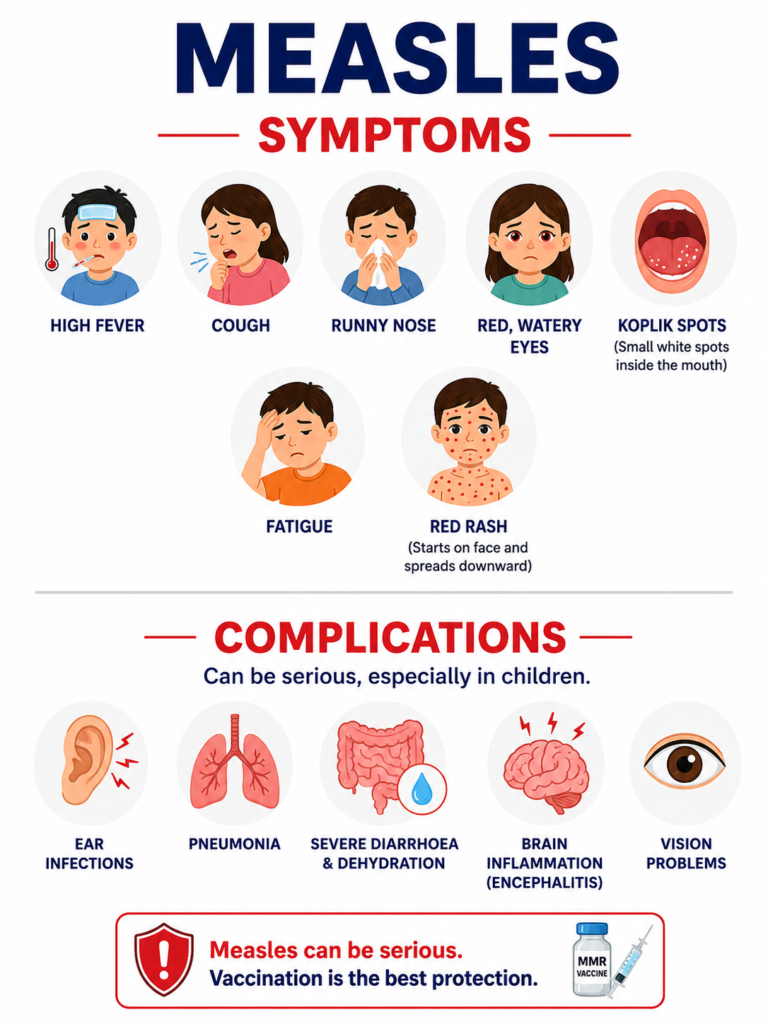
Koplik spots, a small white lesions inside the mouth that may develop before the skin rash, is a characteristic feature of measles. A red-brown rash usually begins on the face and spreads downward to other parts of the body.
Complications of Measles
Measles can cause serious issues and complications in young children, pregnant individuals, and people with weakened immune systems.
Possible complications include:
- Ear infections
- Pneumonia
- Severe diarrhoea and dehydration
- Brain inflammation (encephalitis)
- Vision problems
- Subacute sclerosing panencephalitis (SSPE)
CDC reports that approximately 1 in 1,000 mealses cases may develop acute encephalitis, which can result in permanent neurological damage.
Diagnosis and Treatment
Laboratory testing is recommended for suspected cases and outbreaks. Diagnosis is based on clinical overview, exposure history, symptoms, vaccination status and laboratory confirmation.
No specific antiviral treatment has been approved for measles till date. Treatment mainly involves supportive care, which includes:
- Maintaining hydration
- Managing fever
- Treating bacterial complications
- Providing vitamin A supplementation when clinically indicated
Prevention
The measles-mumps-rubella (MMR) vaccine remains the most effective method for preventing measles. It provides strong protection against infection and reduces the risk of outbreaks.
Global Impact of Measles
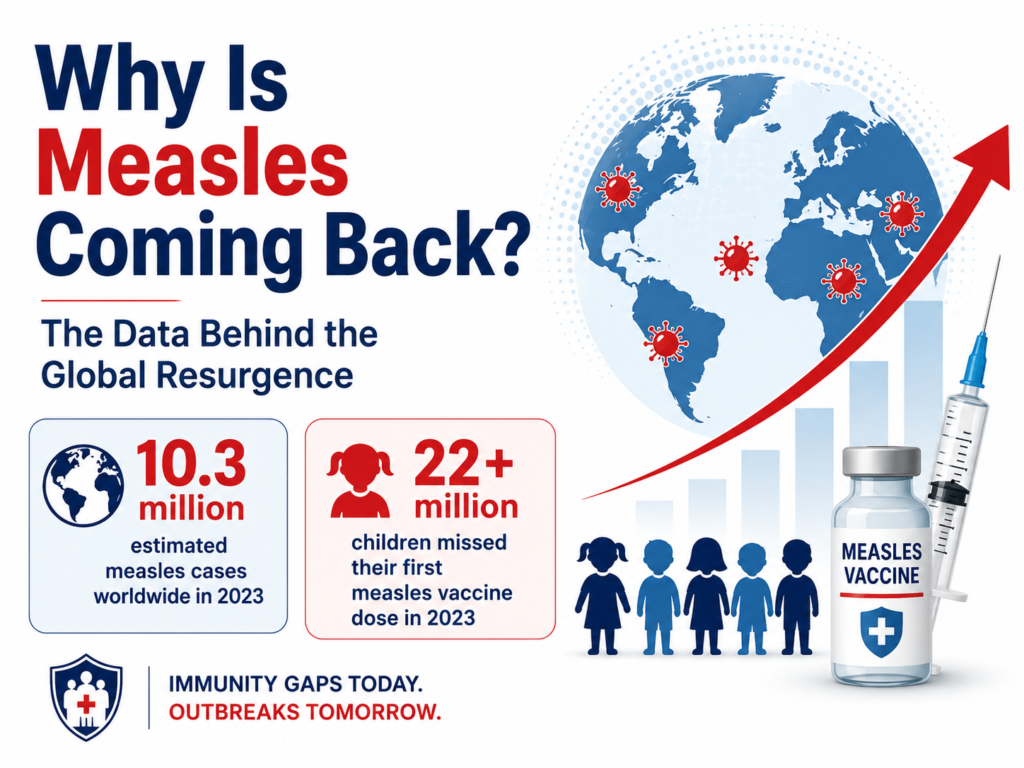
Measles is making a global comeback after years of decline, mainly due to falling vaccination coverage and growing immunity gaps. In 2023, an estimated 10.3 million measles cases were reported worldwide, representing a 20% increase compared with 2022, while 57 countries experienced large or disruptive outbreaks. The decline in routine childhood immunisation during the COVID-19 pandemic left millions of children unprotected, allowing the virus to spread rapidly when communities reopened.
Measles remains a global health concern despite decades of vaccination efforts. In 2024, an estimated 95,000 measles deaths occurred worldwide, mostly among unvaccinated or under-vaccinated children under five years of age.
Combined with vaccine hesitancy, misinformation, disrupted healthcare services, and increased international travel, these immunity gaps have allowed a disease once considered controlled to return as a major global public health threat.
The investment in vaccination programs, continued disease surveillance, and outbreak response is necessary to move toward global measles elimination.
References
Centers for Disease Control and Prevention. (2026). Clinical overview of measles.
Centers for Disease Control and Prevention. (2024). Measles, mumps, rubella (MMR) vaccine safety.
Mayo Clinic. (2025). Measles: Symptoms and causes. Mayo Foundation for Medical Education and Research.
Moss, W. J. (2017). Measles. The Lancet, 390(10111), 2490–2502. https://doi.org/10.1016/S0140-6736(17)31463-0
National Health Service. (2025). Measles. NHS.
UK Health Security Agency. (2025). Measles factsheet. UK Government.
World Health Organization. (2026). Measles fact sheet.
Pingback: Measles History: Critical Outbreaks, Timeline and Global Impact